How to Make Your Own Manhwa (Even If You Can’t Draw)

GenToon
Oct 7, 2026 · 5 min read
An example comic created with GenToon AI.
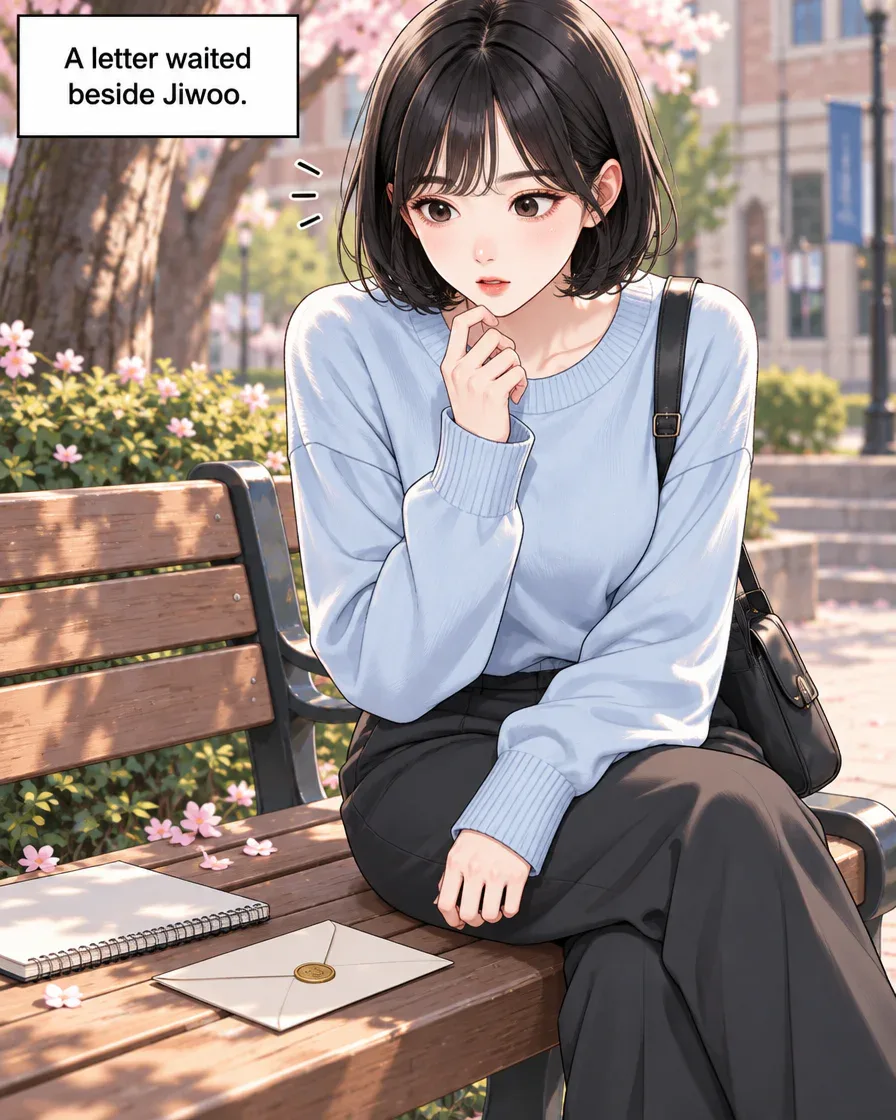
Panel 1Example generated in GenToon, panel 1 of 12.
The 12-panel result above uses the original request. The four-panel practice uses a different request.
Create webtoons and chat with people.
The button fills the Studio input so you can edit it before sending. Check the plan and current cost in Studio before drawing.
See webtoons by other creatorsExplore different art styles and stories in the community.A future letter leads Jiwoo to greet Minseo and write back. Read the finished English scene, then choose a four-panel practice or the original twelve-panel request for your own version.
A scene from a novel becomes a webtoon
Jiwoo hesitates, greets Minseo and writes back in this completed twelve-panel English GenToon example. You can start with a proposed four-panel practice or prepare the original twelve-panel request, then edit it for one scene of your own.
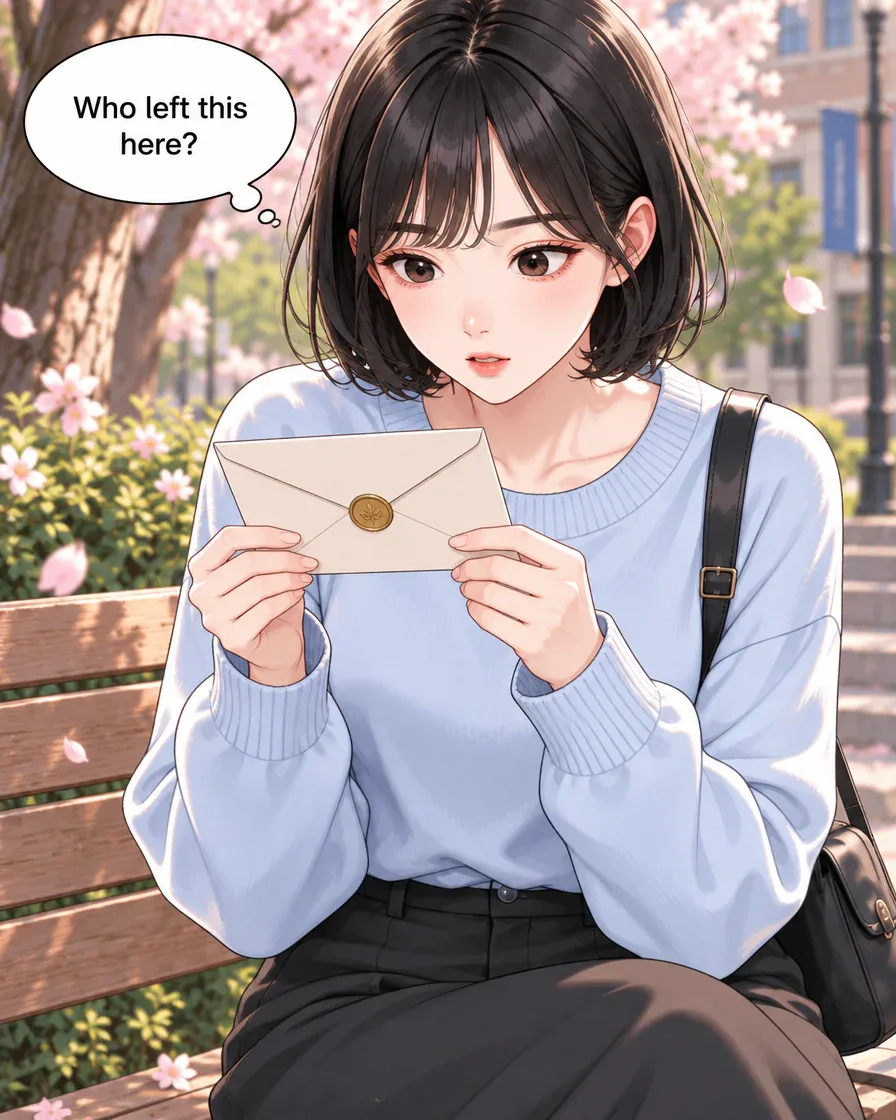
Panel 2Example generated in GenToon, panel 2 of 12. 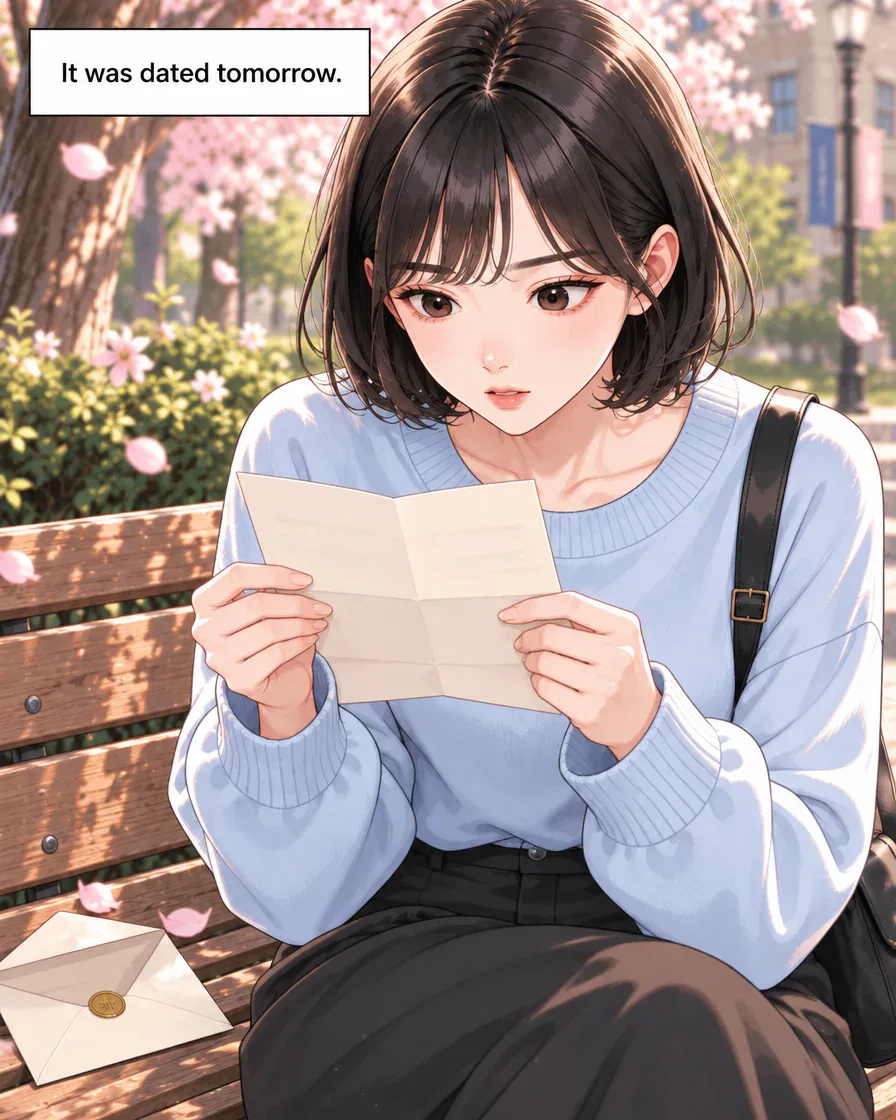
Panel 3Example generated in GenToon, panel 3 of 12. 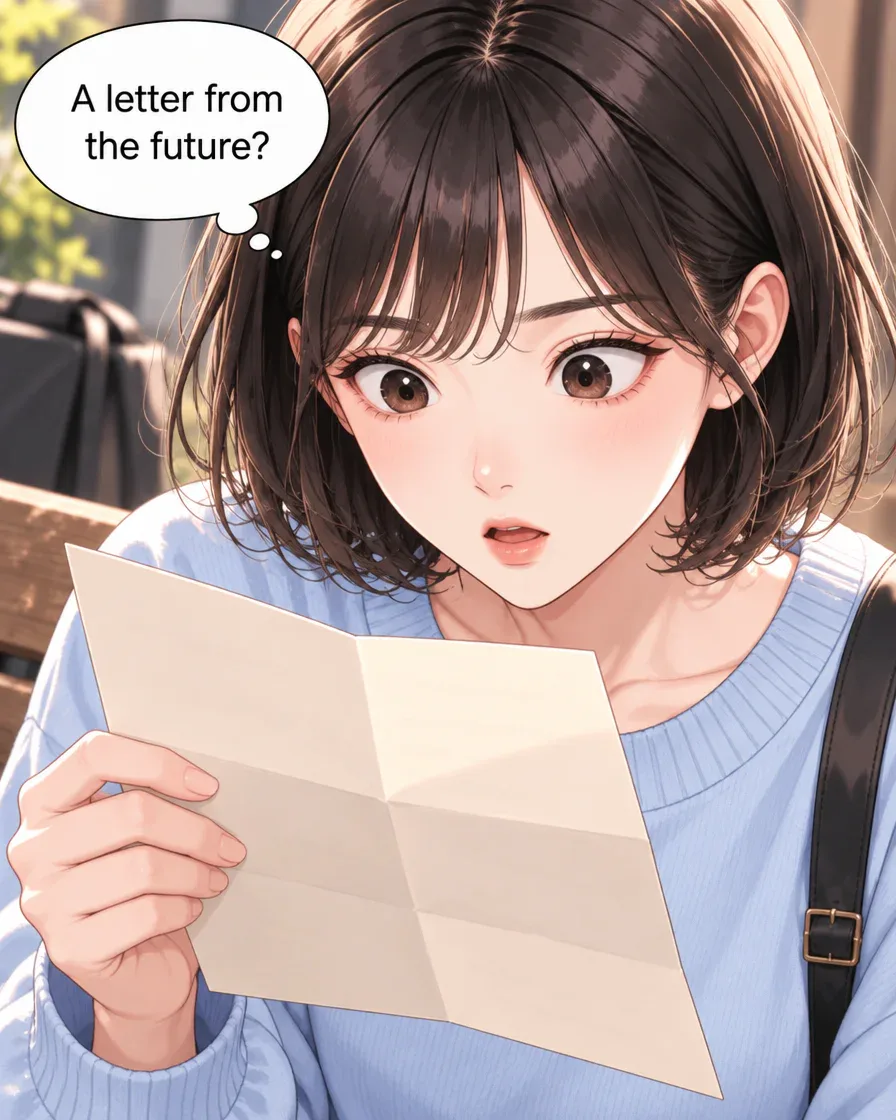
Panel 4Example generated in GenToon, panel 4 of 12.
Read all 12 panels (8 more)
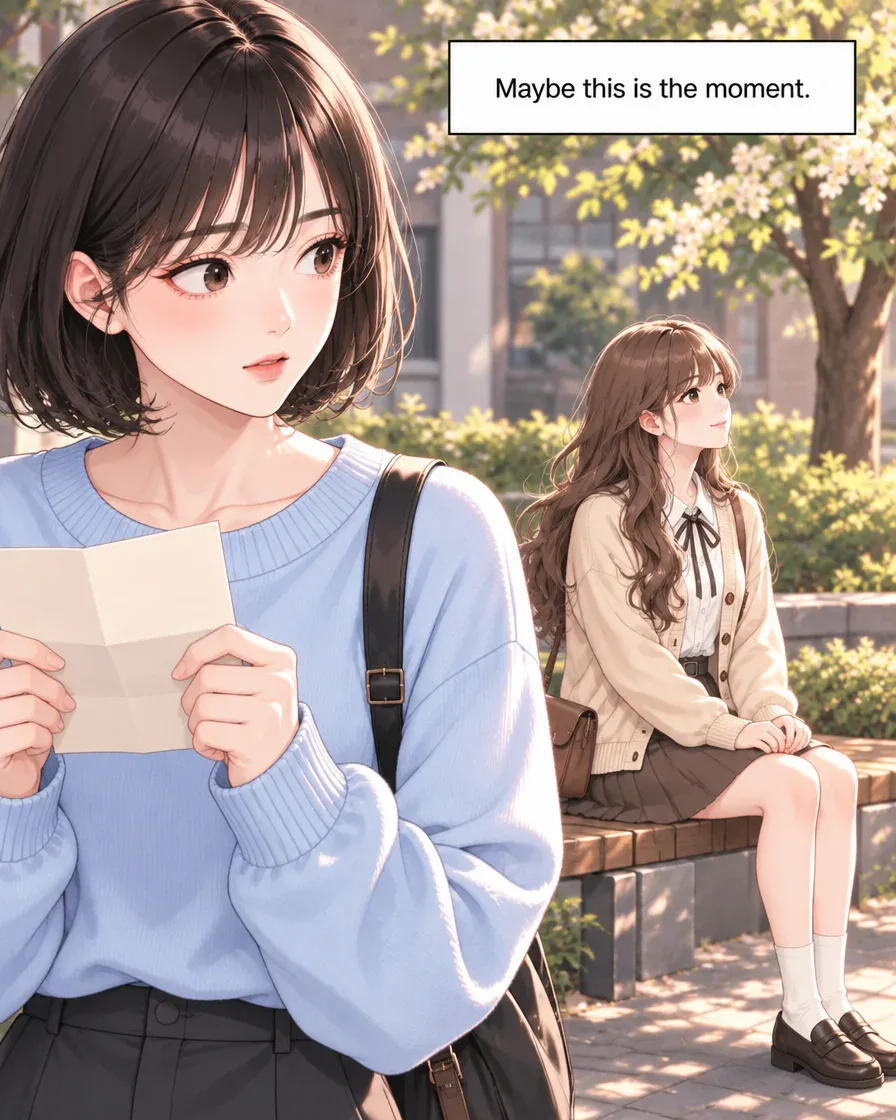
Panel 5Example generated in GenToon, panel 5 of 12. 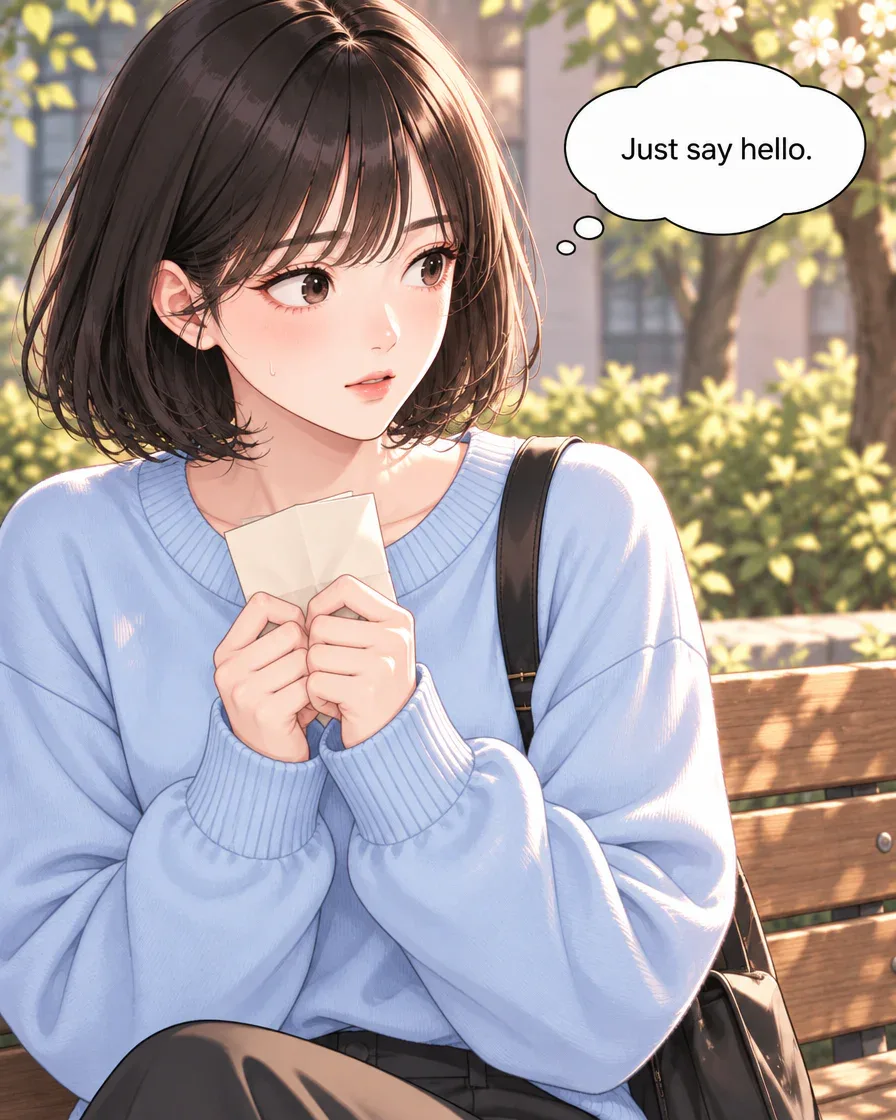
Panel 6Example generated in GenToon, panel 6 of 12. 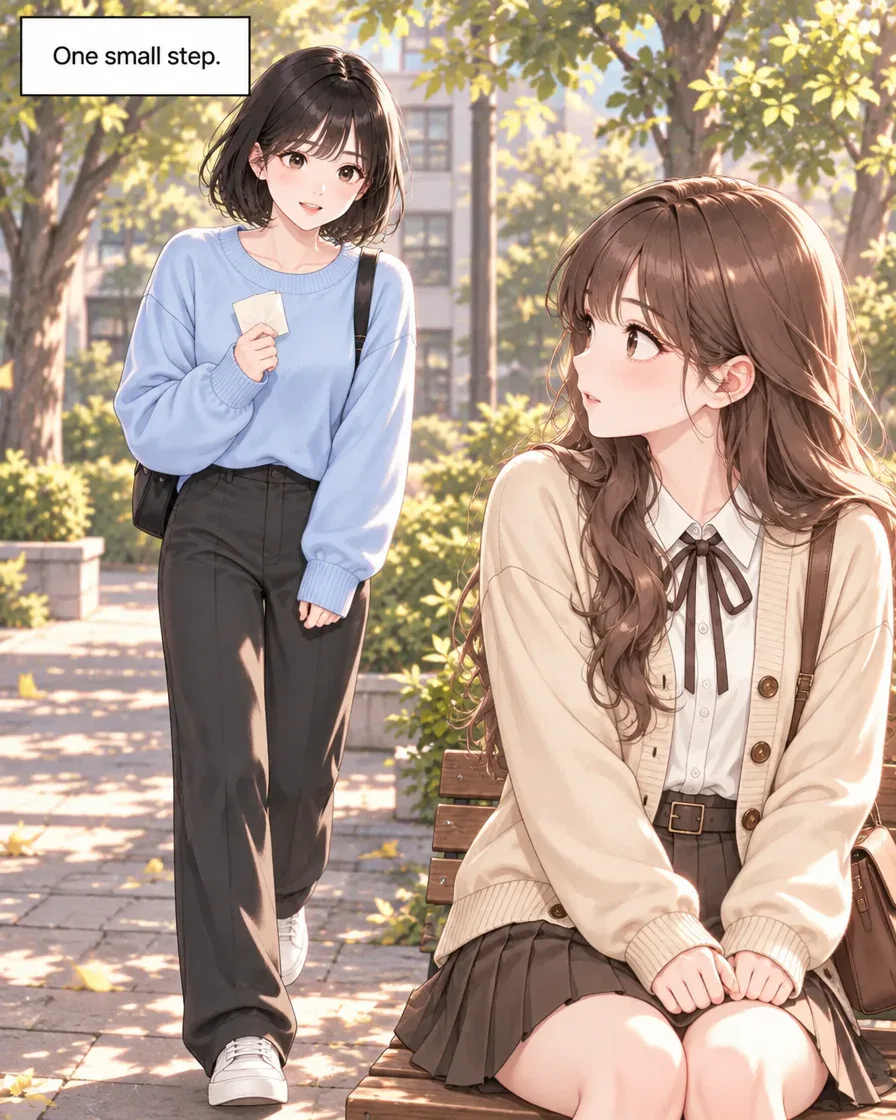
Panel 7Example generated in GenToon, panel 7 of 12. 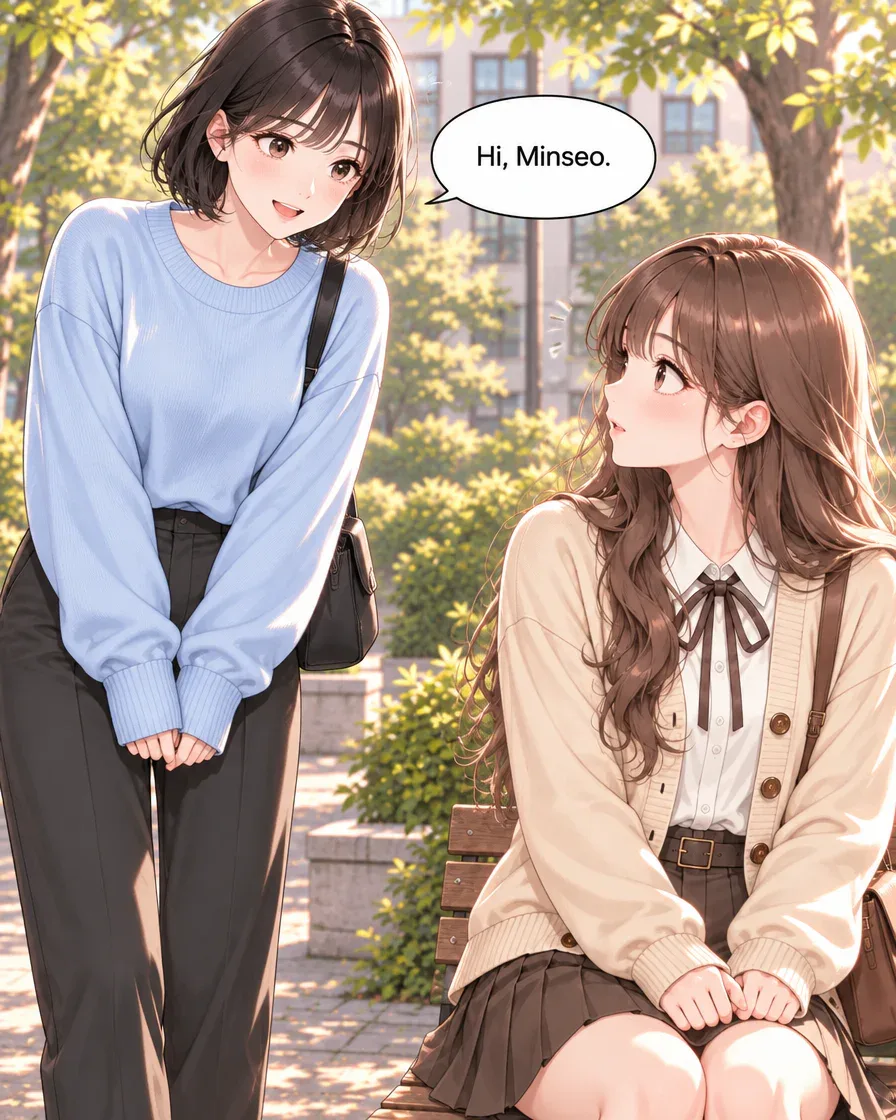
Panel 8Example generated in GenToon, panel 8 of 12. 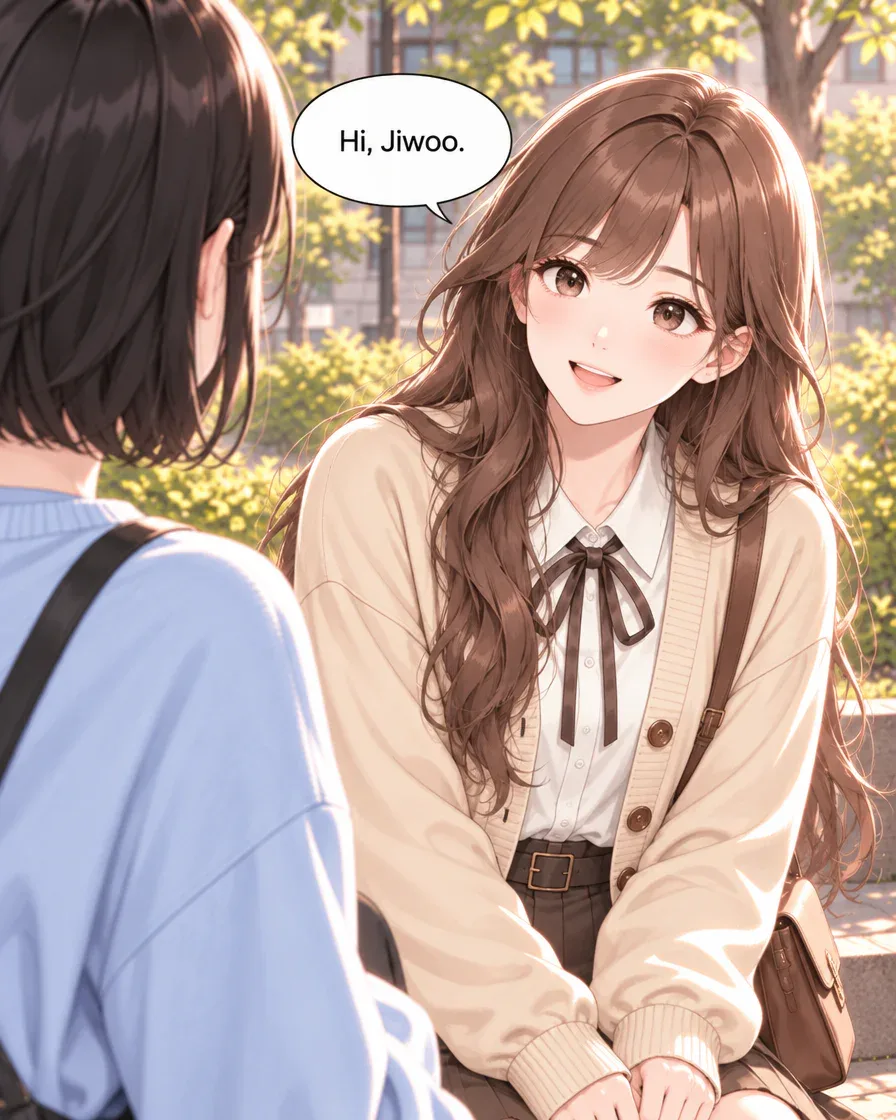
Panel 9Example generated in GenToon, panel 9 of 12. 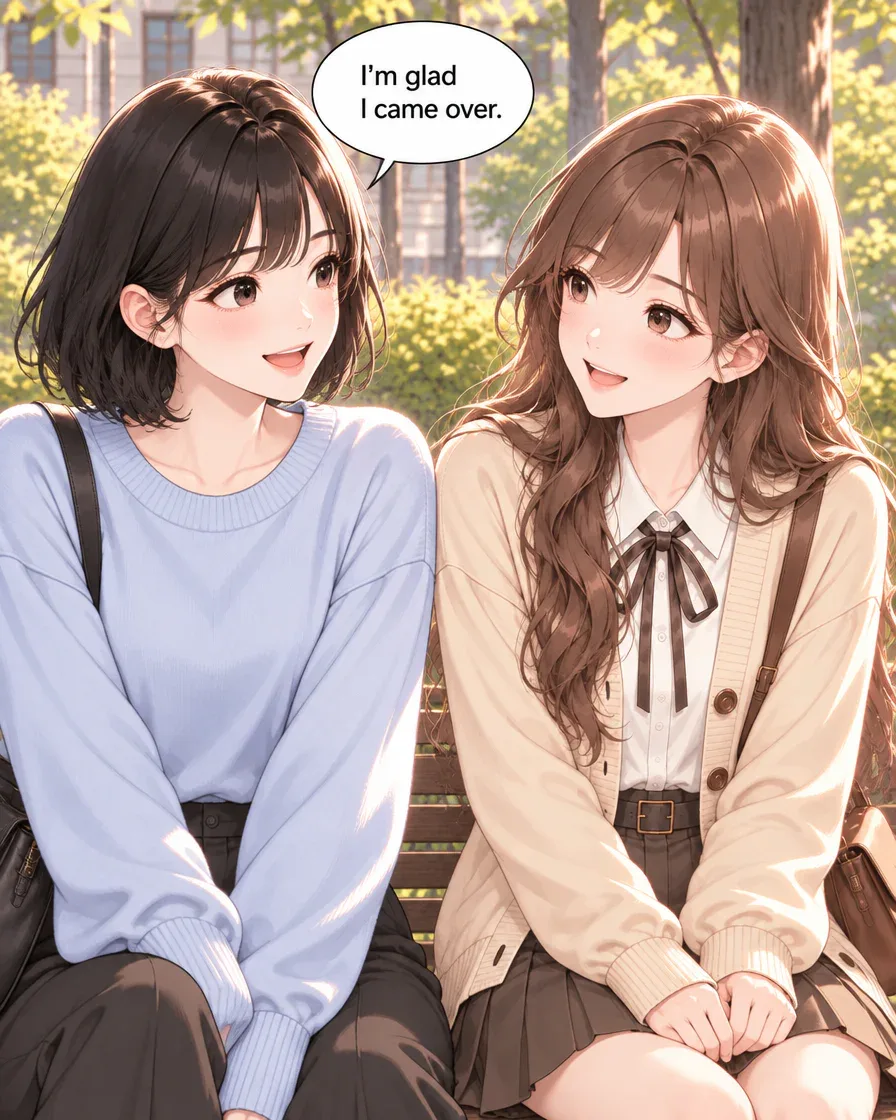
Panel 10Example generated in GenToon, panel 10 of 12. 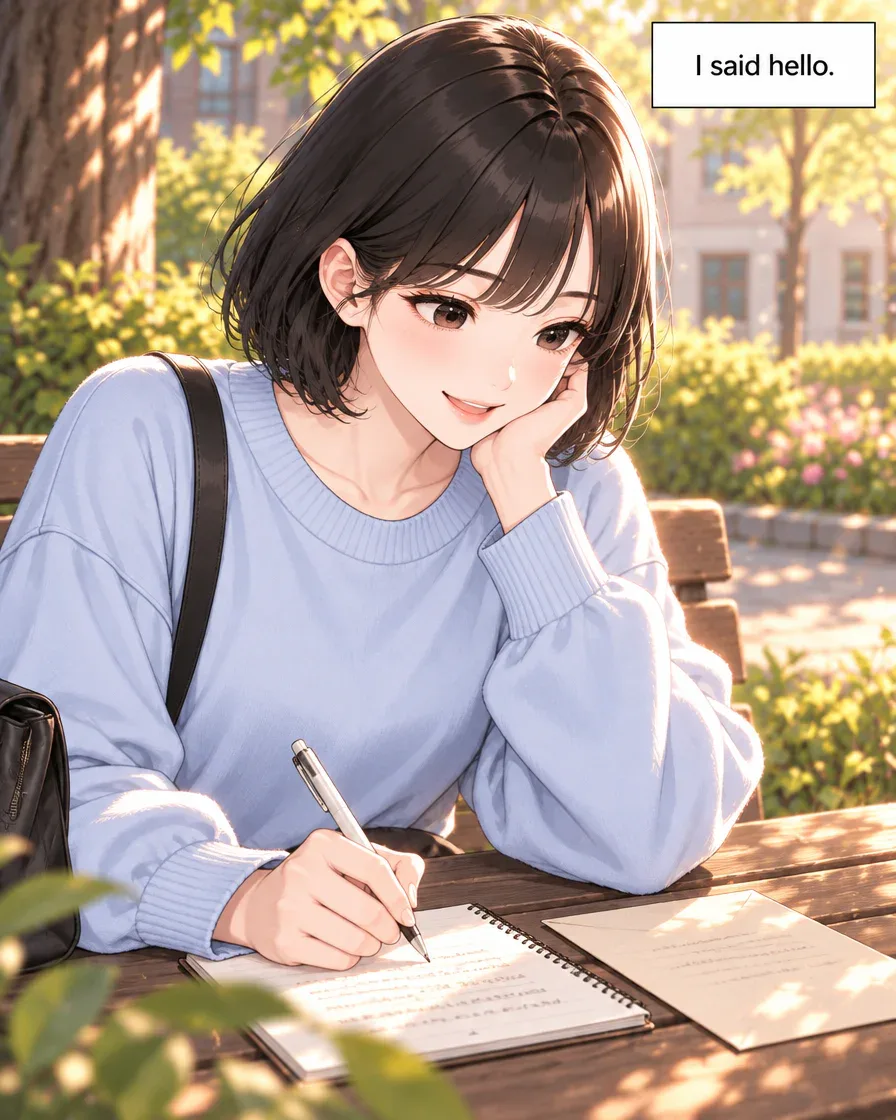
Panel 11Example generated in GenToon, panel 11 of 12. 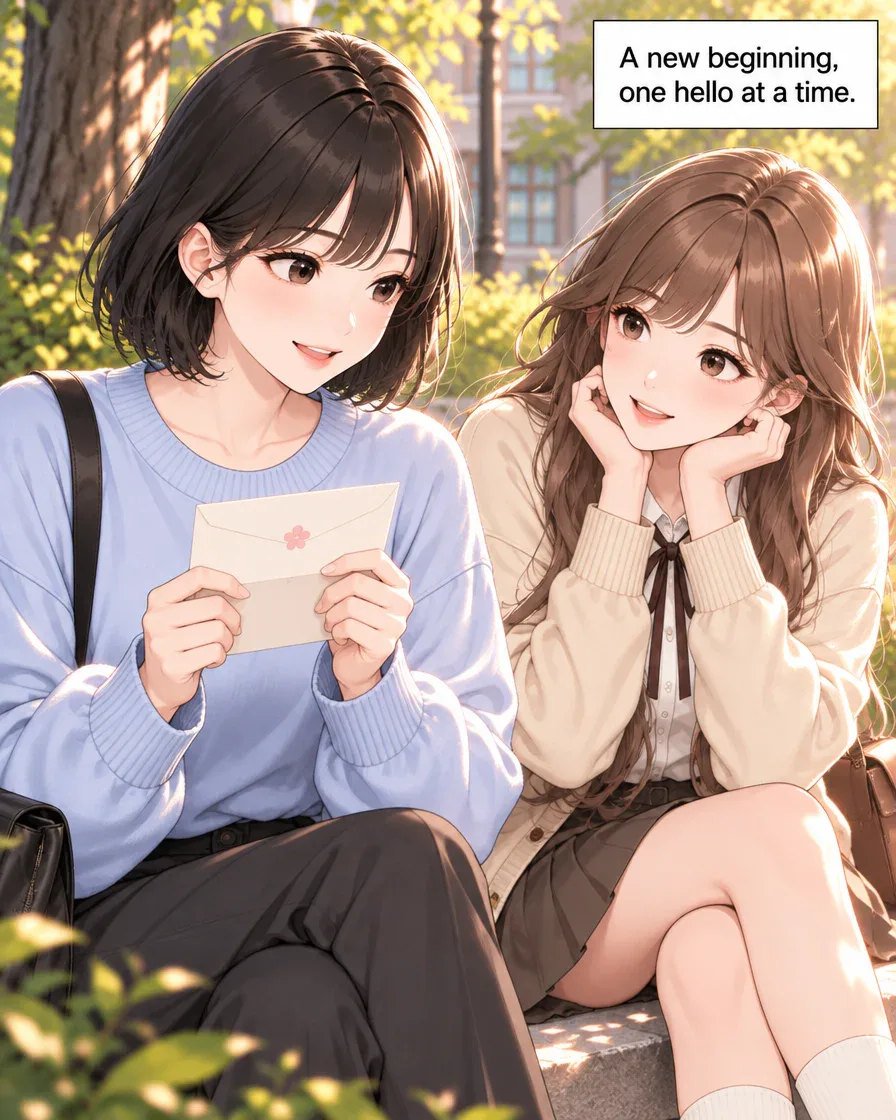
Panel 12Example generated in GenToon, panel 12 of 12.
Request for your own version
Jiwoo finds a future letter, greets Minseo and writes back. Make 12 panels with short English dialogue.
Art style used: Webtoon
How this example was made
- Choose your starting input
Choose “Try a four-panel scene first” for the practice suggestion, or “Use the original twelve-panel request” for the source input. Edit your cast and situation, pause to read the draft, then send when ready.
- Review the plan and displayed cost
Check the characters, dialogue, panel count, selected style and quality, and displayed cost before drawing. If a drawing countdown appears while you want to revise, choose “Wait, let me change it.”
- Read your scene and choose what follows
Compare the finished dialogue, actions and appearances with your plan. Save the version you want to keep, check any revision cost, and keep future scene ideas separate from completed events.
Inspired to tell your own story?
The 12-panel result above uses the original request. The four-panel practice uses a different request.
Create webtoons and chat with people.
The button fills the Studio input so you can edit it before sending. Check the plan and current cost in Studio before drawing.
See webtoons by other creatorsExplore different art styles and stories in the community.Quick answer
- Start with one decision: hesitation, a greeting and a reply.
- This guide shows an existing twelve-panel English result.
- You can prepare a four-panel practice or its original request, edit the input, review the displayed cost and plan, then read your finished scene.
“Just say hello.” Jiwoo gathers herself and walks toward Minseo. By the ending, they are smiling and Jiwoo is writing back. One small decision can give your first manhwa a beginning and an ending.
The twelve English panels shown here are a finished GenToon example. Follow its original request, recorded plan and results, then choose how to begin your version.
For a smaller first exercise, choose “Try a four-panel scene first.” To prepare the request that made this example, choose “Use the original twelve-panel request.” Both starting points leave room to edit your draft before sending.
1. What can your first manhwa scene show?
A letter waits beside Jiwoo’s notebook. It is dated tomorrow. Her next choice is small: stay where she is or approach Minseo. The finished scene follows that choice through a greeting and a written reply.
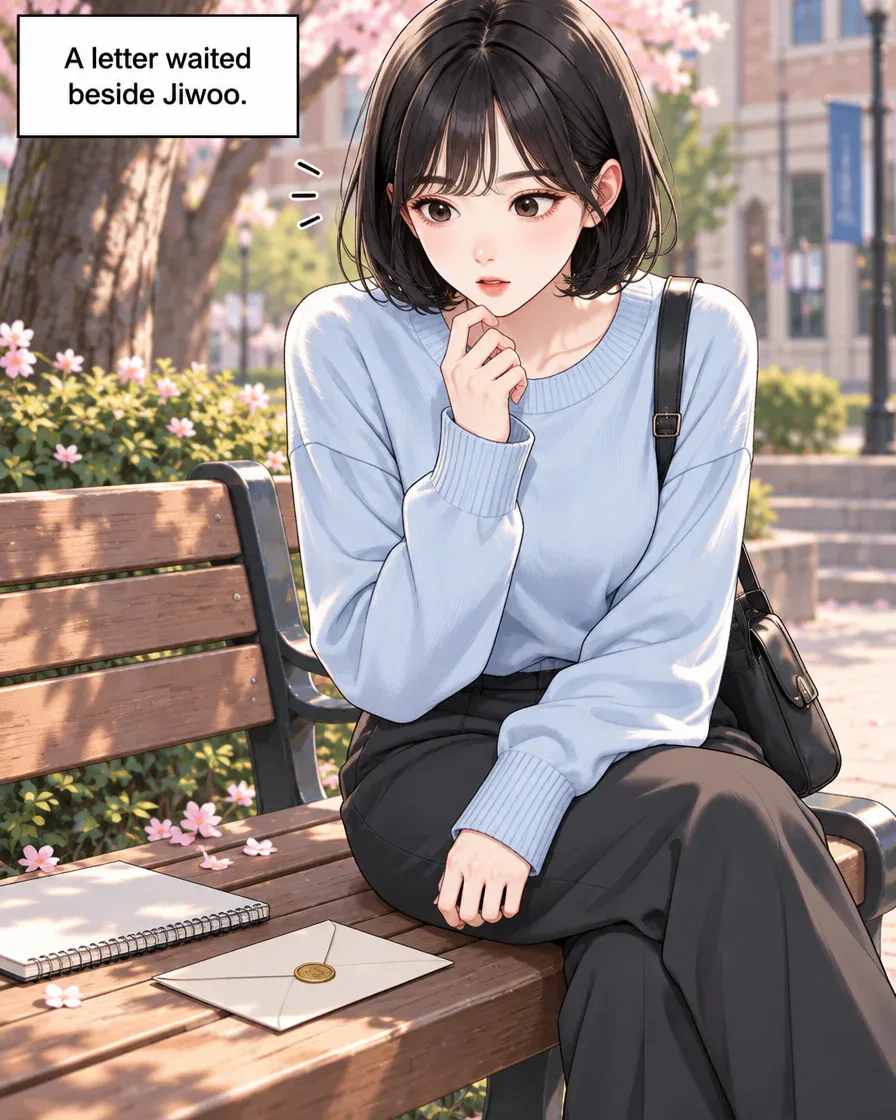
Start your own manhwa with one person, one interruption and one action. Choose the moment a reader should understand without knowing a complete season. You can work on a four-panel practice first, or use the original twelve-panel request to explore this sequence in more steps.
2. How do you turn an idea into a visible choice?
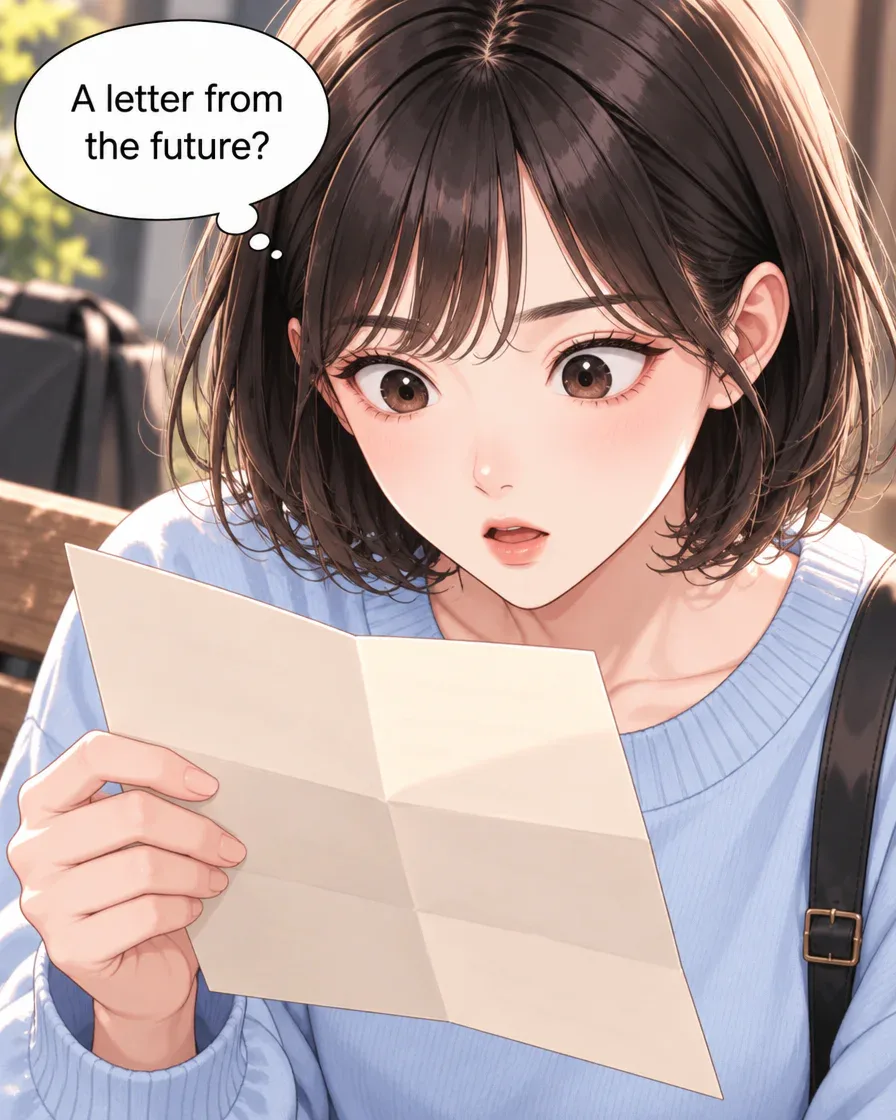
Jiwoo’s surprised face makes the letter matter. Later, “Just say hello” accompanies her pause before she walks over. A thought becomes an action the reader can follow.
Use this small brief for your own scene:
| Write down | What this example shows |
|---|---|
| Opening event | Jiwoo finds a mysterious letter |
| Hesitation | She pauses before approaching |
| Action | She greets Minseo |
| Ending change | Jiwoo writes back |
Replace those details with your own cast and situation. Keep the request focused on what changes by the ending. In a four-panel practice, those four beats give you a clear sequence to review.
3. What character details should you keep in view?
Look at the characters in panel seven. Jiwoo has a dark bob, a pale blue sweater, dark trousers and a black shoulder bag. Minseo has long wavy brown hair, a cream cardigan, a white blouse with a dark bow and a brown bag. These are useful comparison notes.
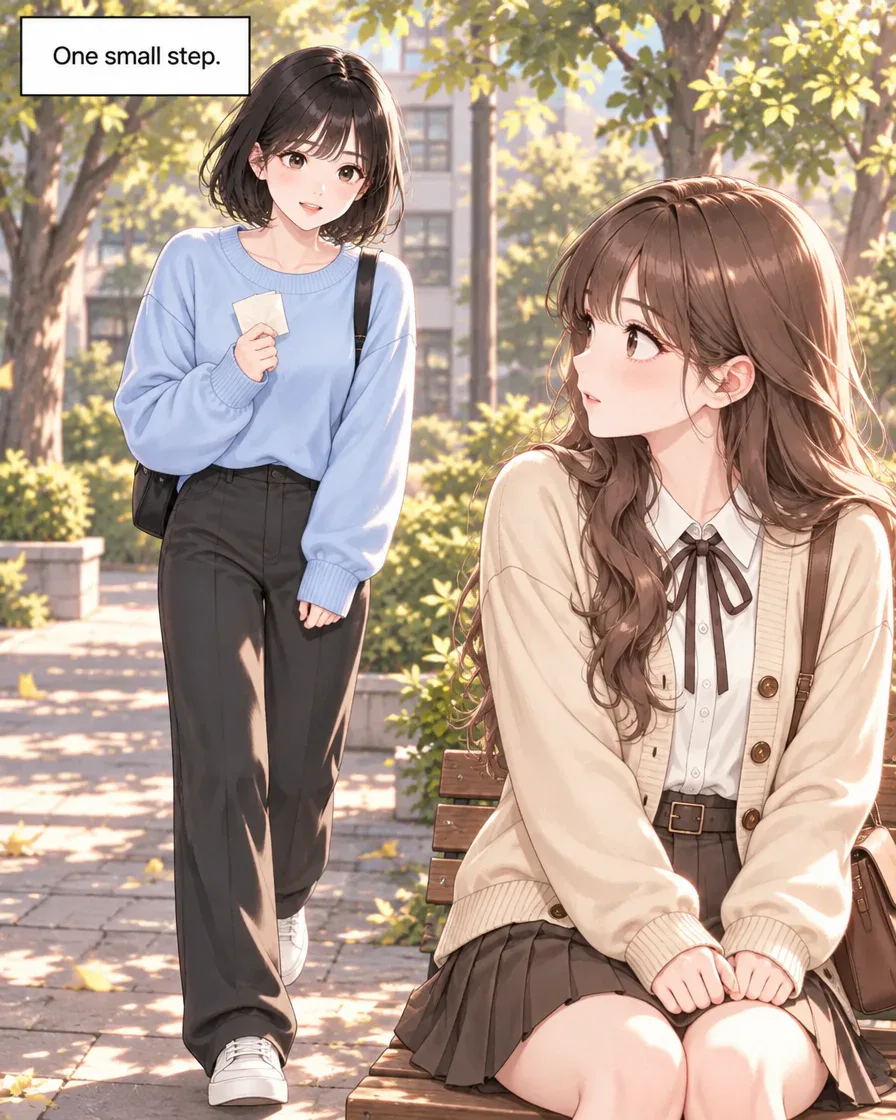
For your own cast, name the speaker and the few visual features that matter. If you have relevant saved character references, check that the new plan selects the intended ones.
This scene shows a greeting and shared smiles. Choose any new relationship history yourself; these images do not establish it. Character notes cannot replace a panel-by-panel check of the finished face, outfit and props.
4. How do you write the scene as panels?
This figure pairs actual panels 1, 4, 8 and 12 with an English reading translation of their recorded scene and dialogue notes. Read the planning text beside the image, then check the visible action and speaker.
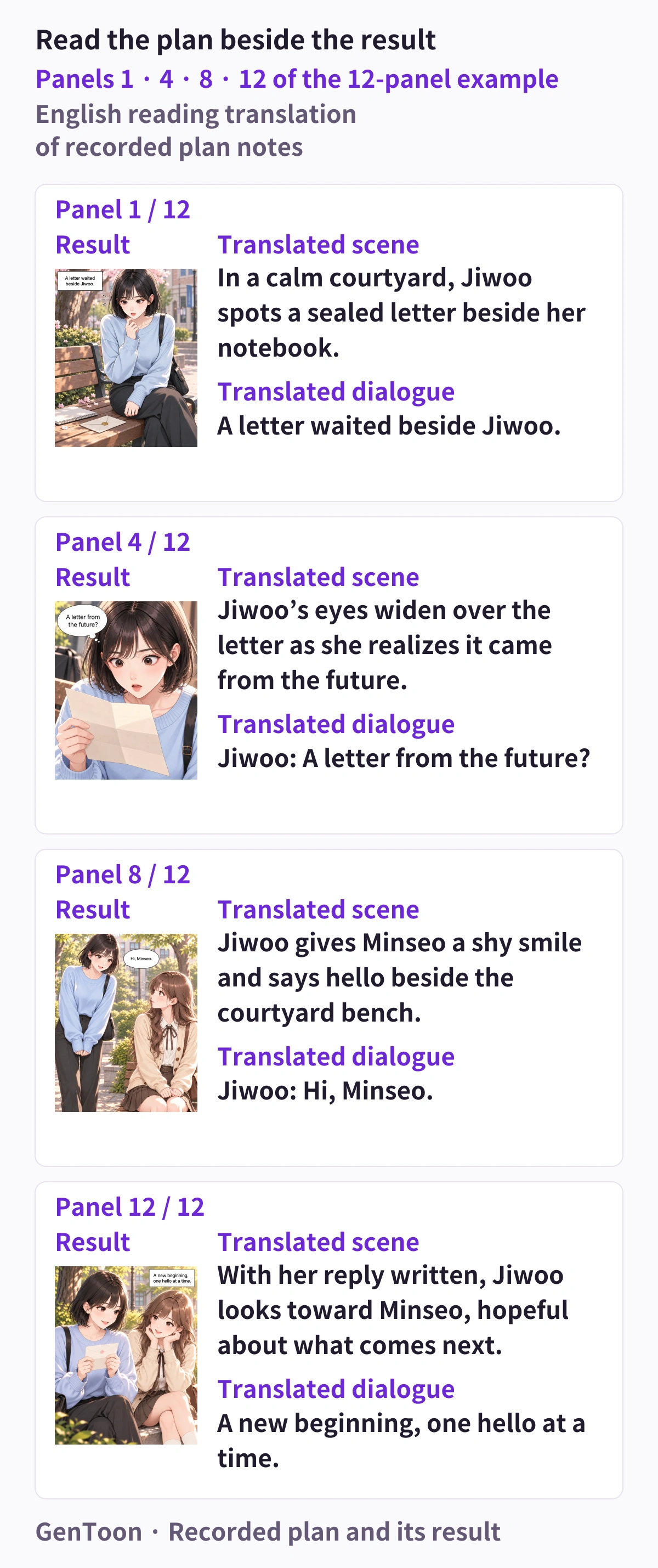
- Panel 1 establishes the letter beside Jiwoo.
- Panel 4 shows her surprised reaction.
- Panel 8 makes the greeting visible.
- Panel 12 closes the scene with a new beginning.
These are selected moments from the completed twelve-panel sequence. The figure is a reading guide to the recorded plan, rather than an app approval card.
For your four-panel practice, give each panel one visible job: discovery, hesitation, greeting and reply. Review the new plan before drawing to check that it follows your chosen sequence.
5. How do you choose your first request?
Choose “Try a four-panel scene first” to prepare this practice suggestion:
Jiwoo finds a future letter, hesitates, greets Minseo and writes back. Make 4 panels with short English dialogue.
The practice suggestion is a new starting input you can edit. The twelve finished images in this guide come from the original request below.
Choose “Use the original twelve-panel request” to prepare that source request:
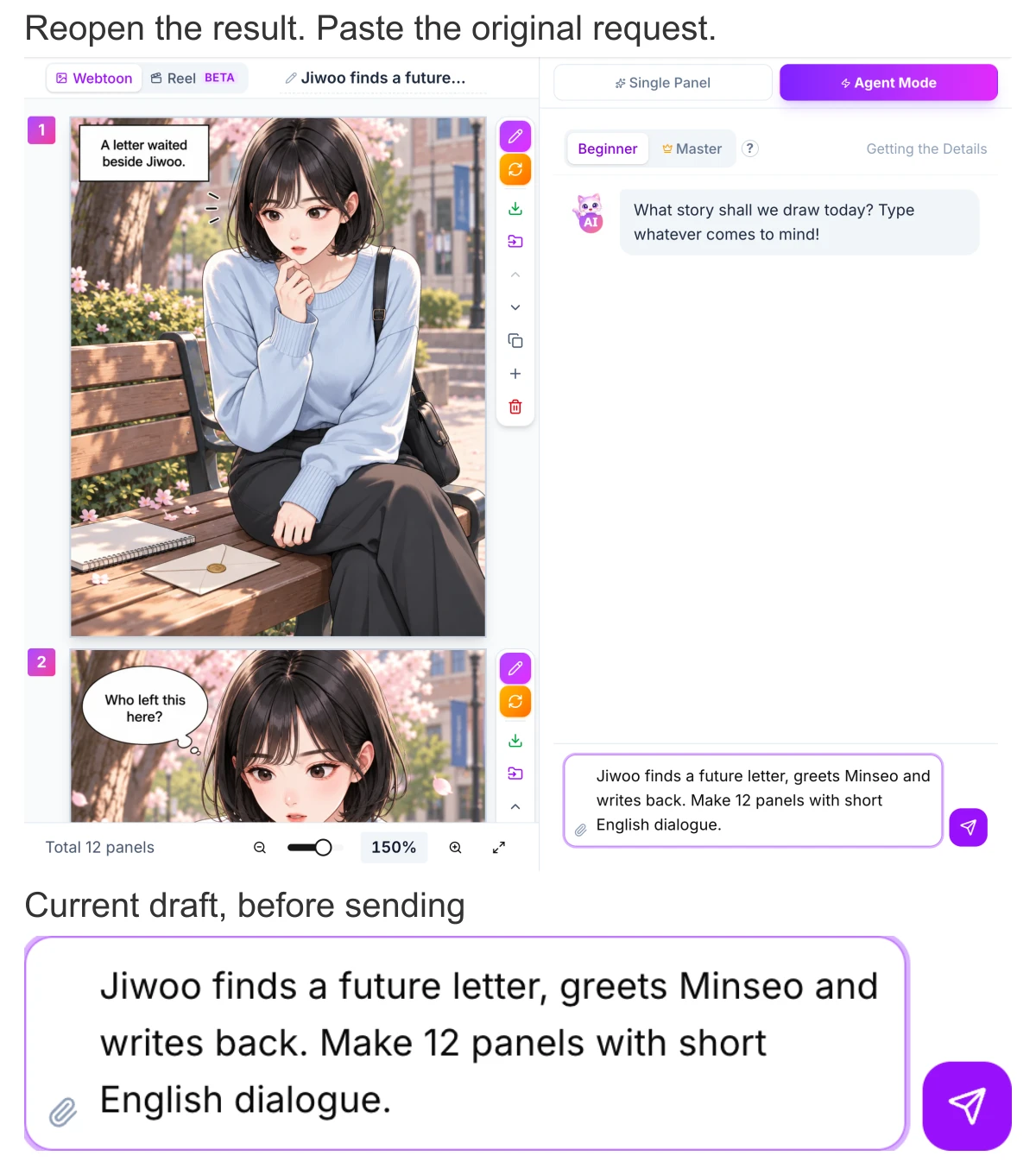
Jiwoo finds a future letter, greets Minseo and writes back. Make 12 panels with short English dialogue.
The capture shows the completed English project reopened, with that original request pasted into the current input as an unsent draft. It is a present input demonstration.
- Choose a starting point, or open Studio and paste the request you want to try. Change the names and situation to make it yours.
- Before sending, pause to read the draft. Check the requested panel count and language, then send when you are ready.
- Review the new plan, selected style and quality, panel count and displayed cost before drawing. If a drawing countdown appears while you need to revise, choose “Wait, let me change it.”
6. How do you read and revise the finished manhwa?
Jiwoo writes after the greeting. The narration “I said hello” connects that action with her earlier decision. Read your own ending against the opening in the same way.
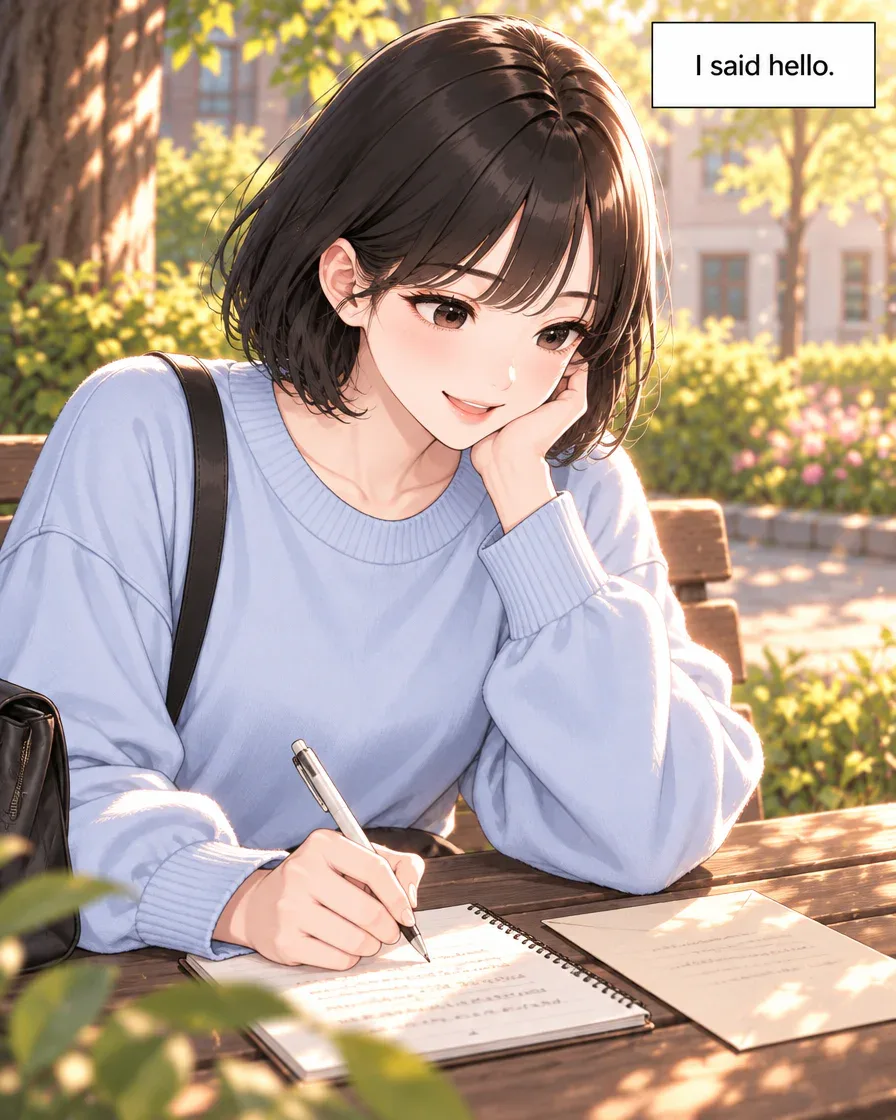
- Story: can a reader explain what the character chose?
- Speech: can you identify each speaker and read the lettering aloud?
- Appearance: do the face, hair, outfit and important props match your references?
- Connection: does the ending follow the actions shown before it?
Read the result at phone size. These source images are separate 4:5 panels; choose the order and spacing for the layout you intend to share.
When a detail needs work, name the panel and the change: “Keep the outfit and expression, but shorten this line.” Check the displayed cost before confirming new image work, then compare the new result with its neighboring panels.
7. What will make the next scene your own?
This completed example ends after a greeting and a reply. You could propose another scene in which Minseo starts a conversation. Keep that idea separate from the event already shown here.
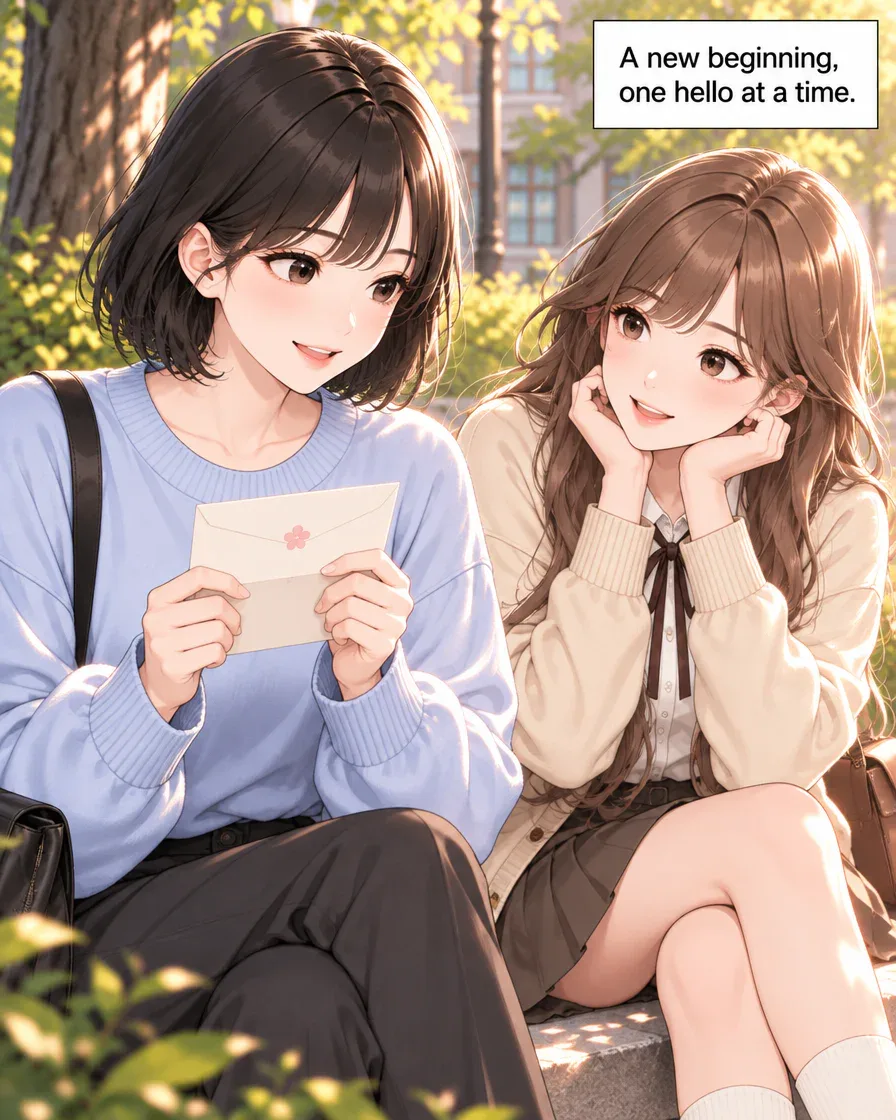
For your first manhwa, take a moment you wrote or have permission to adapt. Decide who acts, what makes the choice difficult and what changes at the end. Start with the four-panel practice, or edit the original request in Studio.
Browse the GenToon community to see how creators use short dialogue and small reactions. If a willing reader looks at your work, ask one concrete question: “Could you tell why the character approached?”
Save the version you want to keep and check its reading order. When you know the scenes and revisions you want to make, compare the current plans. Your own next scene begins with the choice you want the reader to follow.
Frequently asked questions
Can I make my own manhwa if I cannot draw?
Describe one scene in words, then review the plan and finished images. The four-panel practice gives you a focused starting input: discovery, hesitation, greeting and reply. Edit it to use your own cast and situation before sending.
Should I start with four or twelve panels?
Choose the four-panel practice to focus on one short sequence. Choose the original twelve-panel request to start from the input used for the English example here. The four-panel version is a proposed exercise; these twelve images were made from the original twelve-panel request. Check the count in your new plan and read every finished English line.
Will a saved character look identical in every panel?
Relevant saved references can guide a new plan and images. Finished features and props can still drift, so compare each panel with the reference you chose and request a specific correction when needed.
How much does it cost to make a manhwa scene?
Read the current cost shown in Studio for the work you select. Check the quality, panel count and required credits before drawing or confirming a revision. New character work can also affect the total. Compare the current plans when you know what you want to make.