Turn Your Day Into a Four-Panel Comic: A Copyable Storyboard

GenToon
Oct 7, 2026 · 6 min read
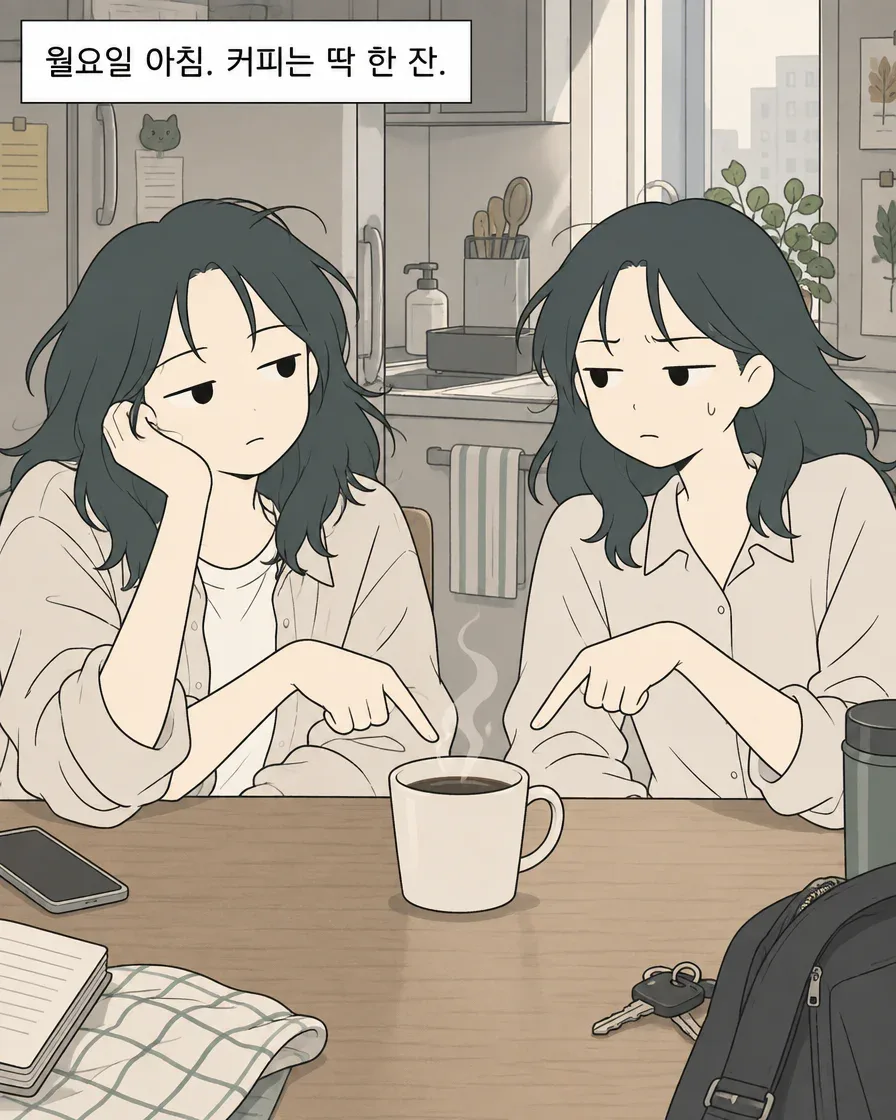
An example comic created with GenToon AI.
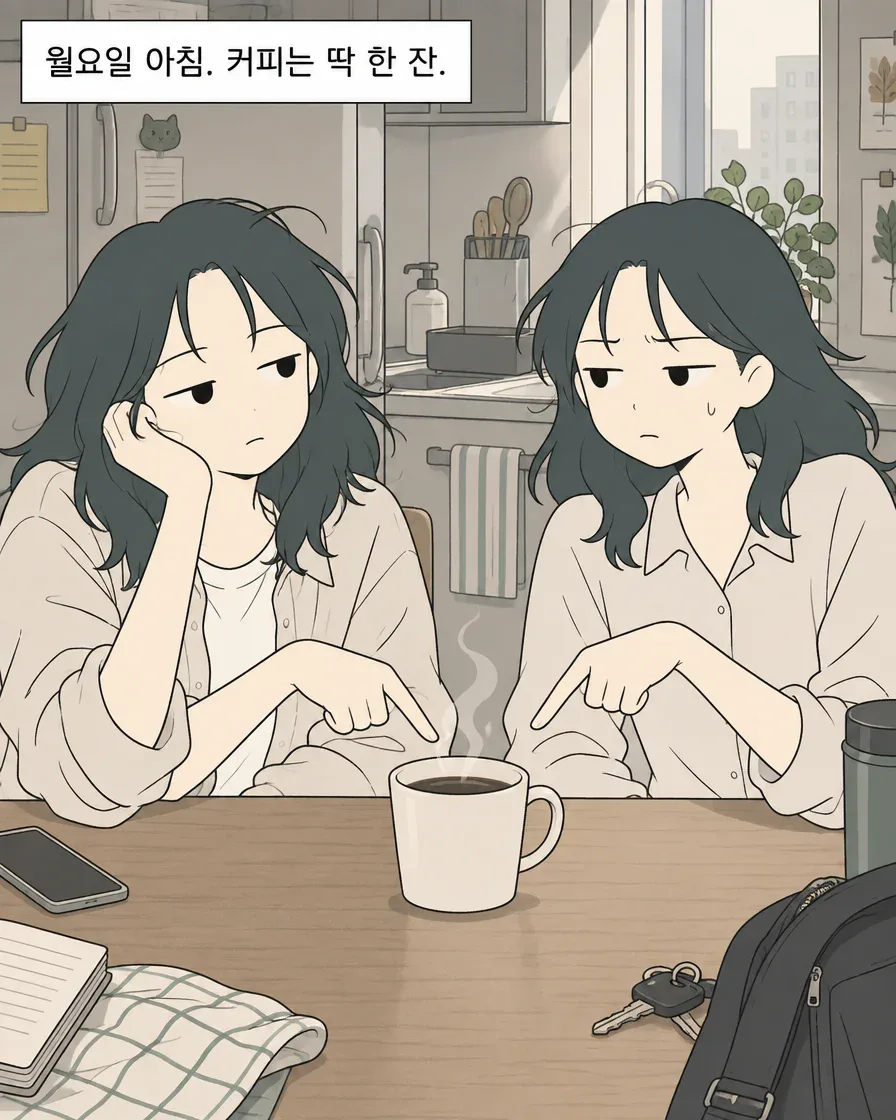
Panel 1
The grocery trip that went sideways. The coffee you reheated three times. One small moment is enough for a comic diary. Start with this four-panel storyboard.
An everyday comic starts with one coffee
Yesterday’s me and today’s me argue over the last cup of coffee. These twelve panels show how expressions and short lines carry one small situation through a story.
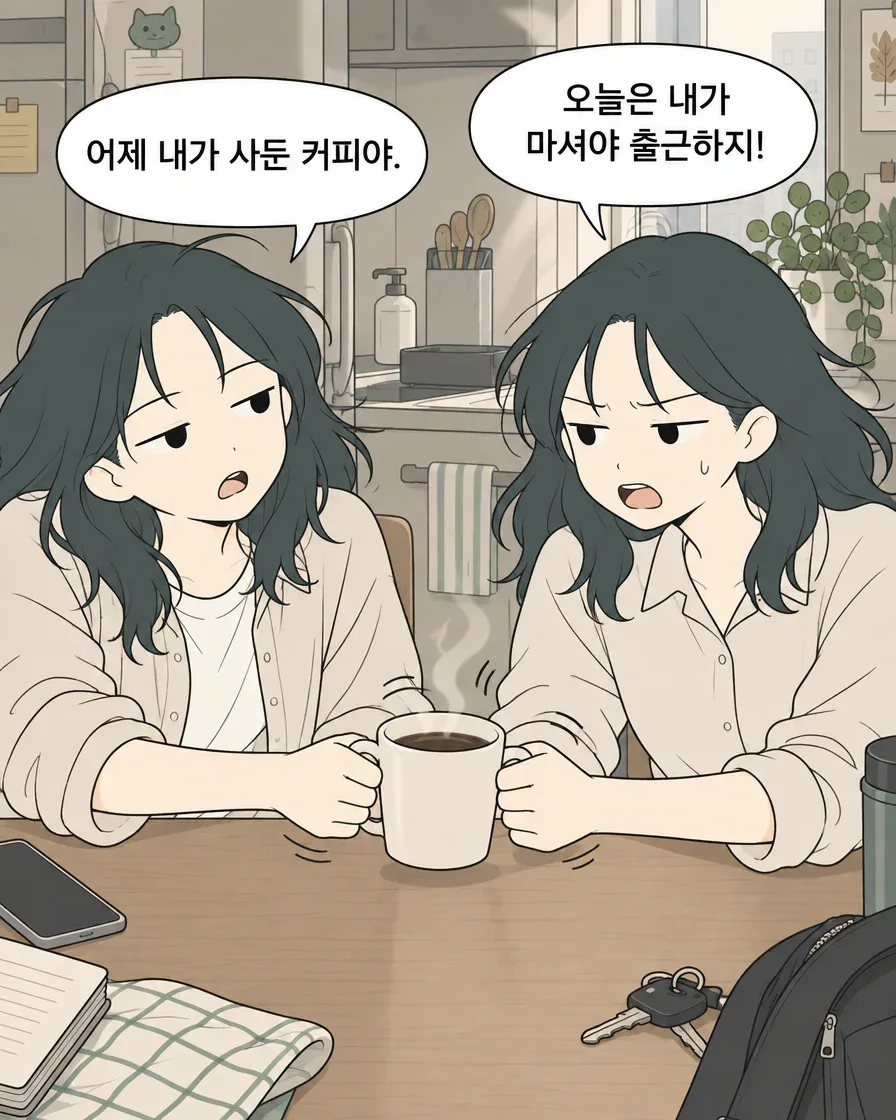
Panel 2 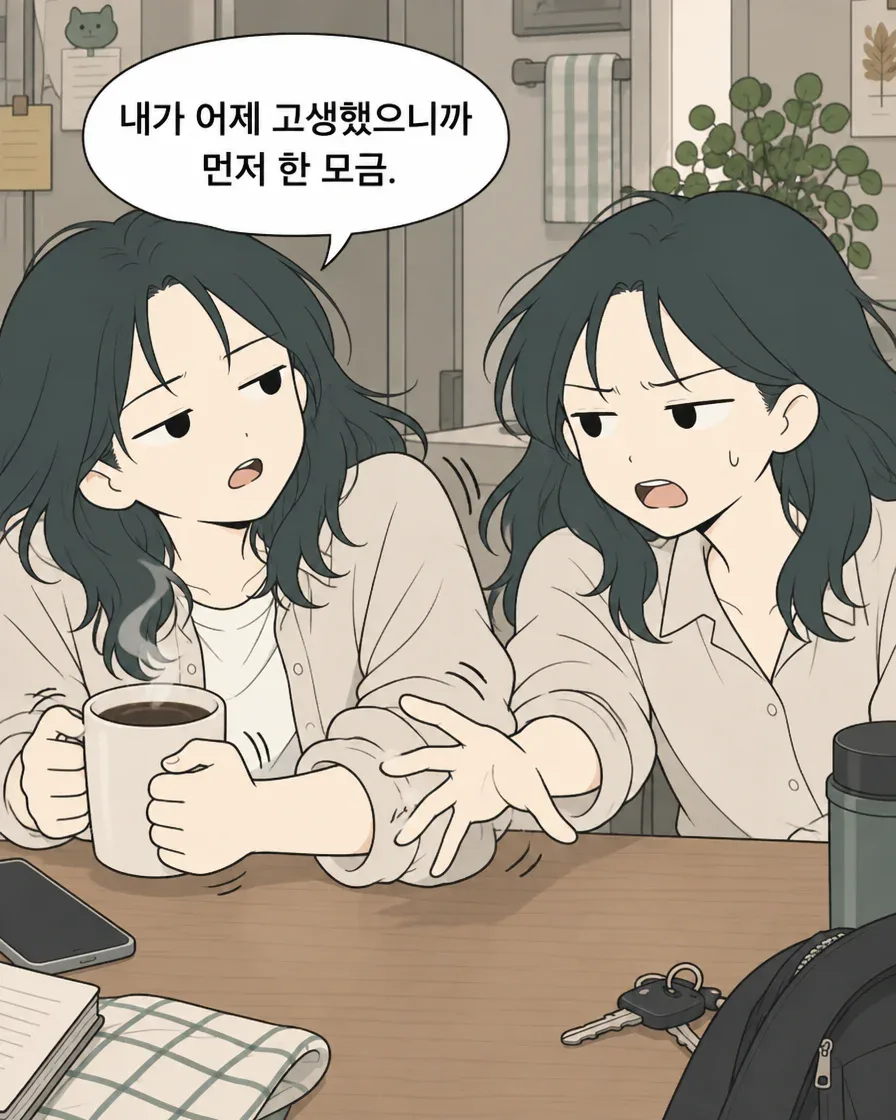
Panel 3 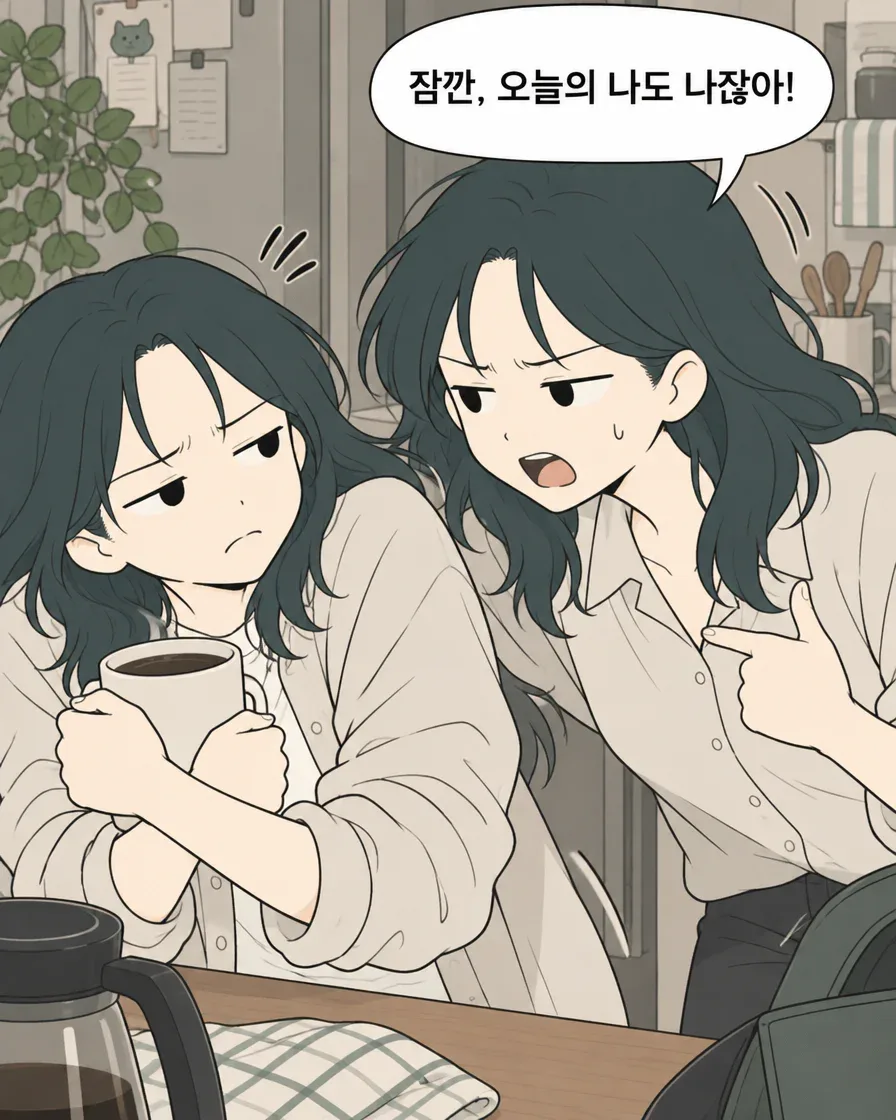
Panel 4
Read all 12 panels (8 more)
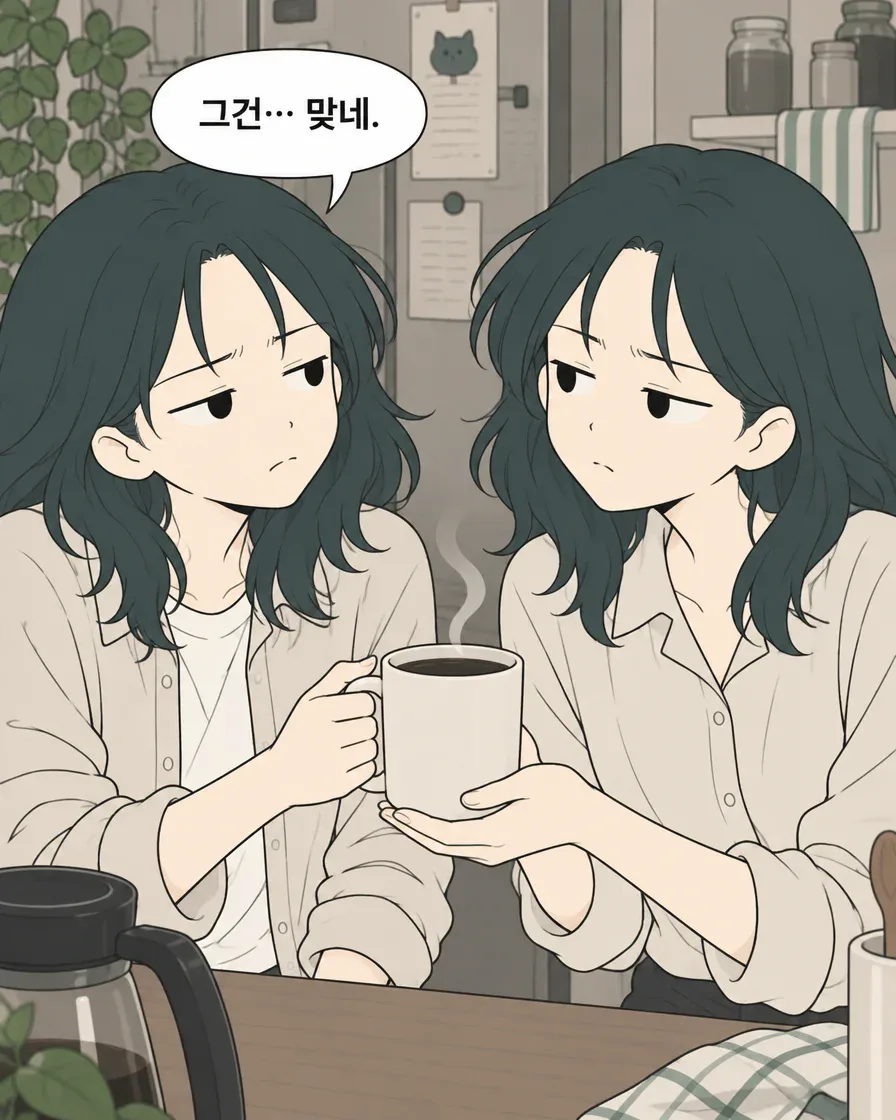
Panel 5 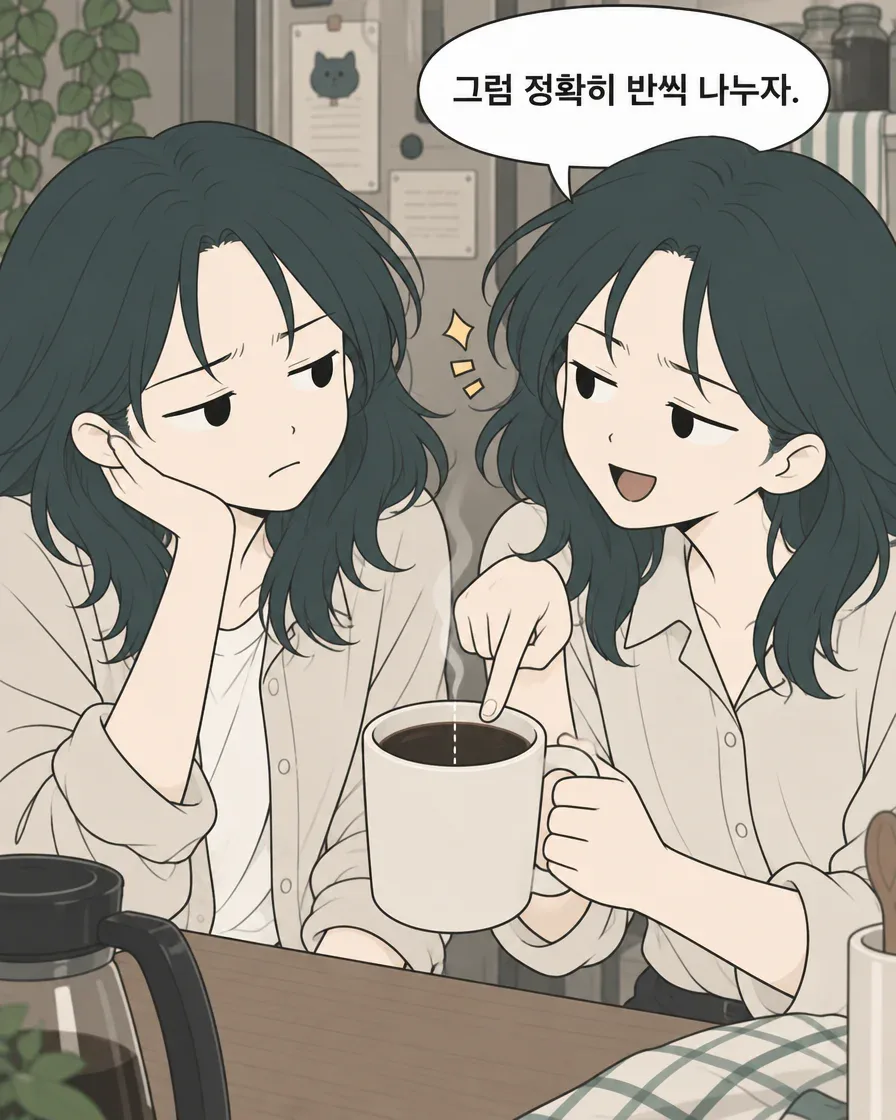
Panel 6 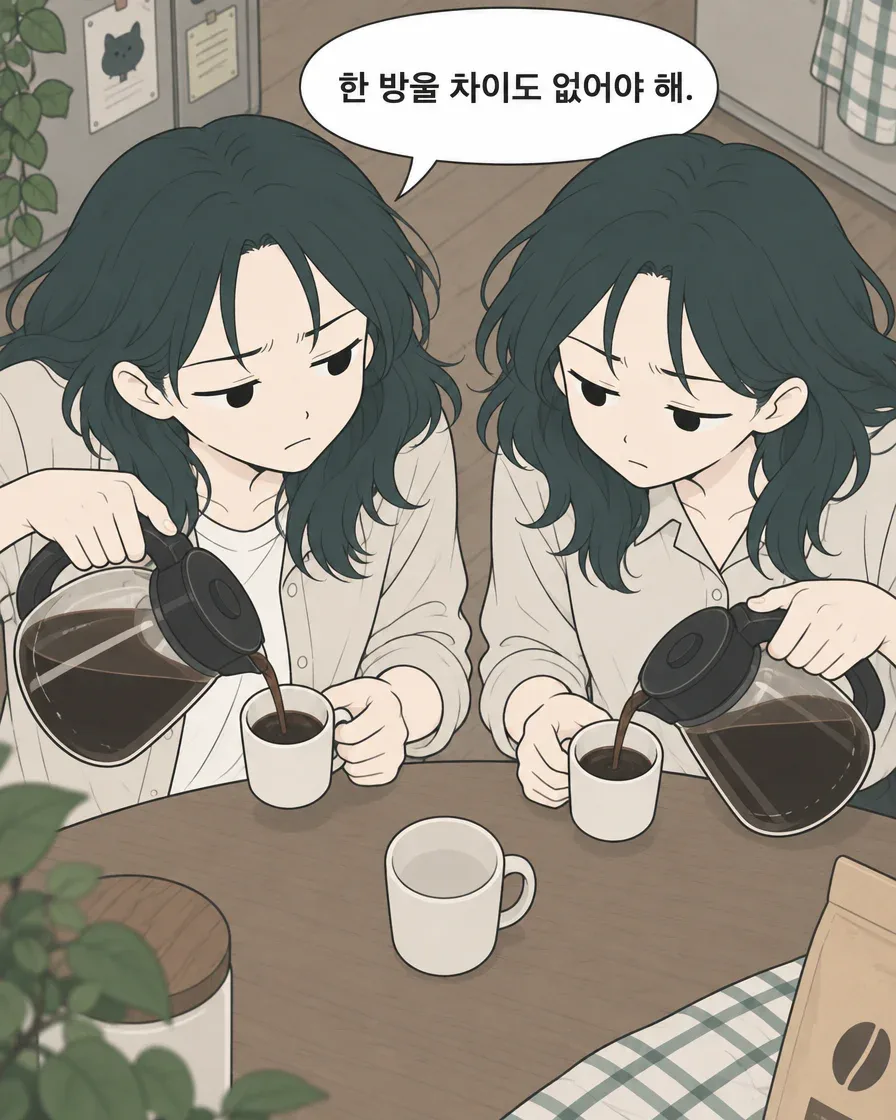
Panel 7 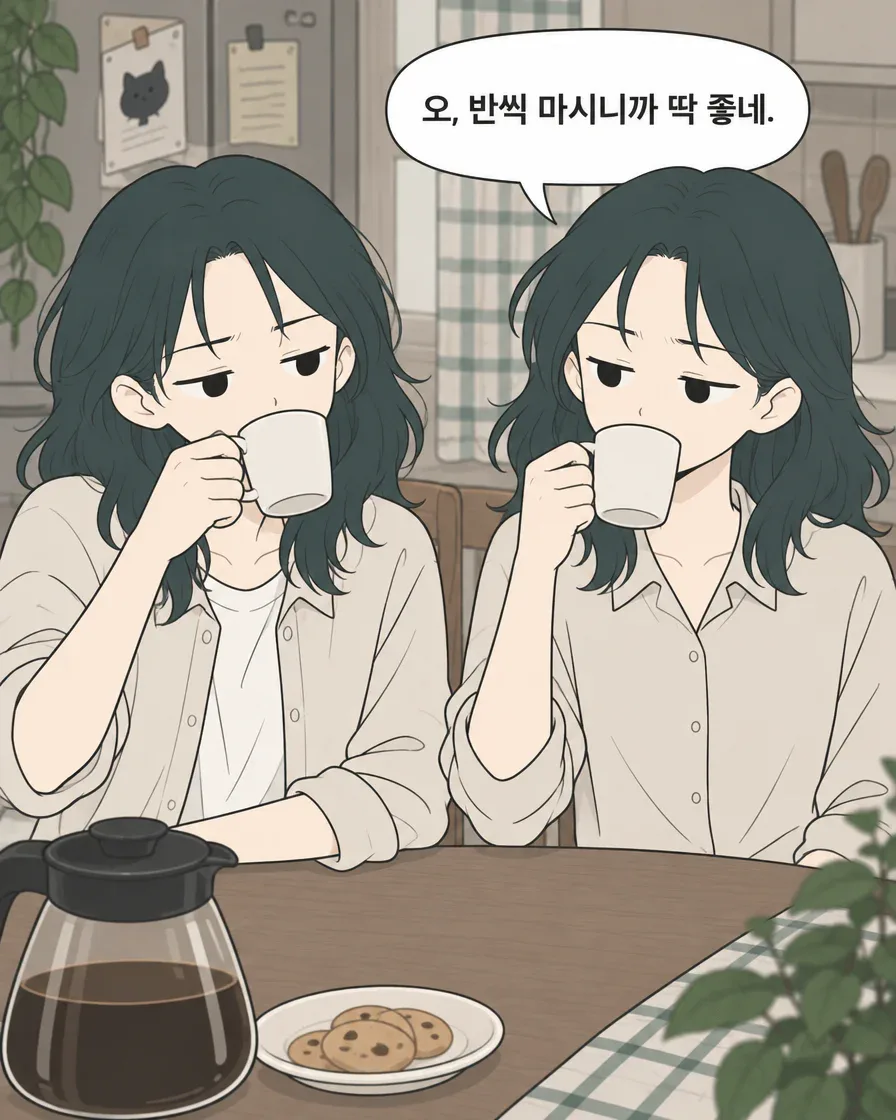
Panel 8 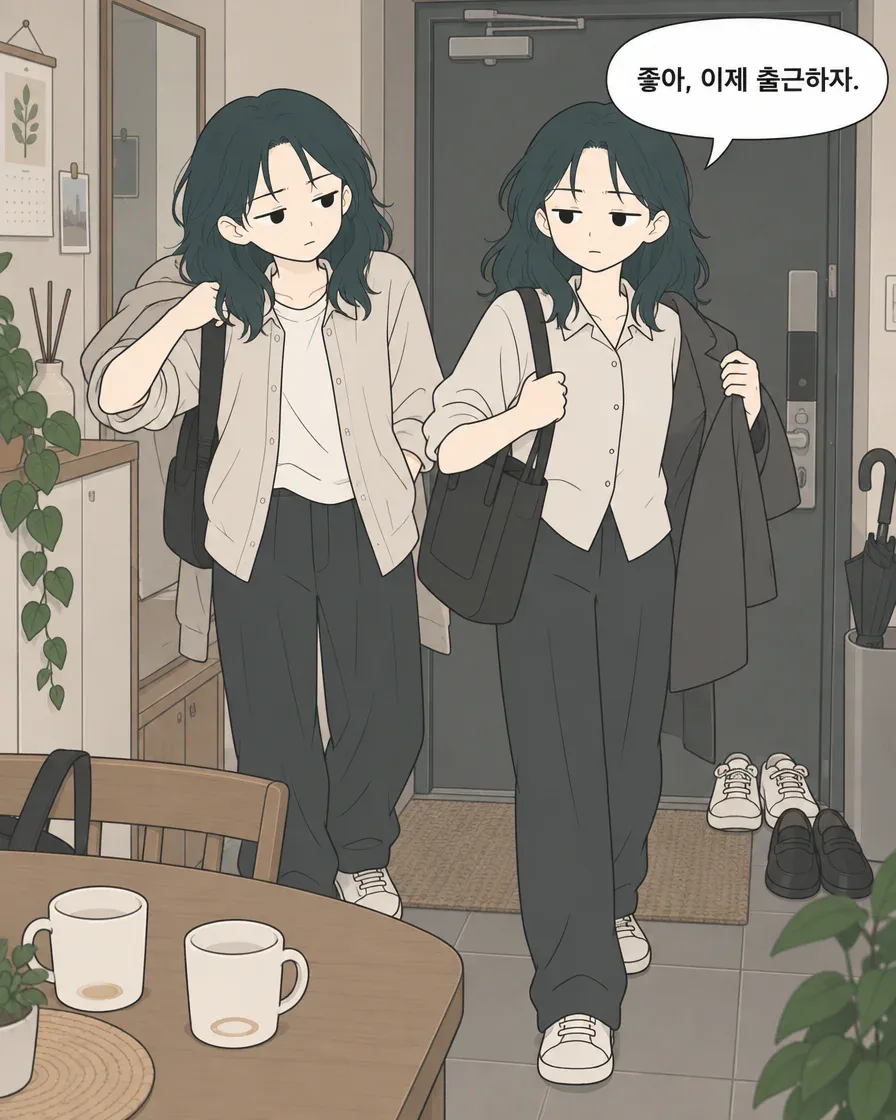
Panel 9 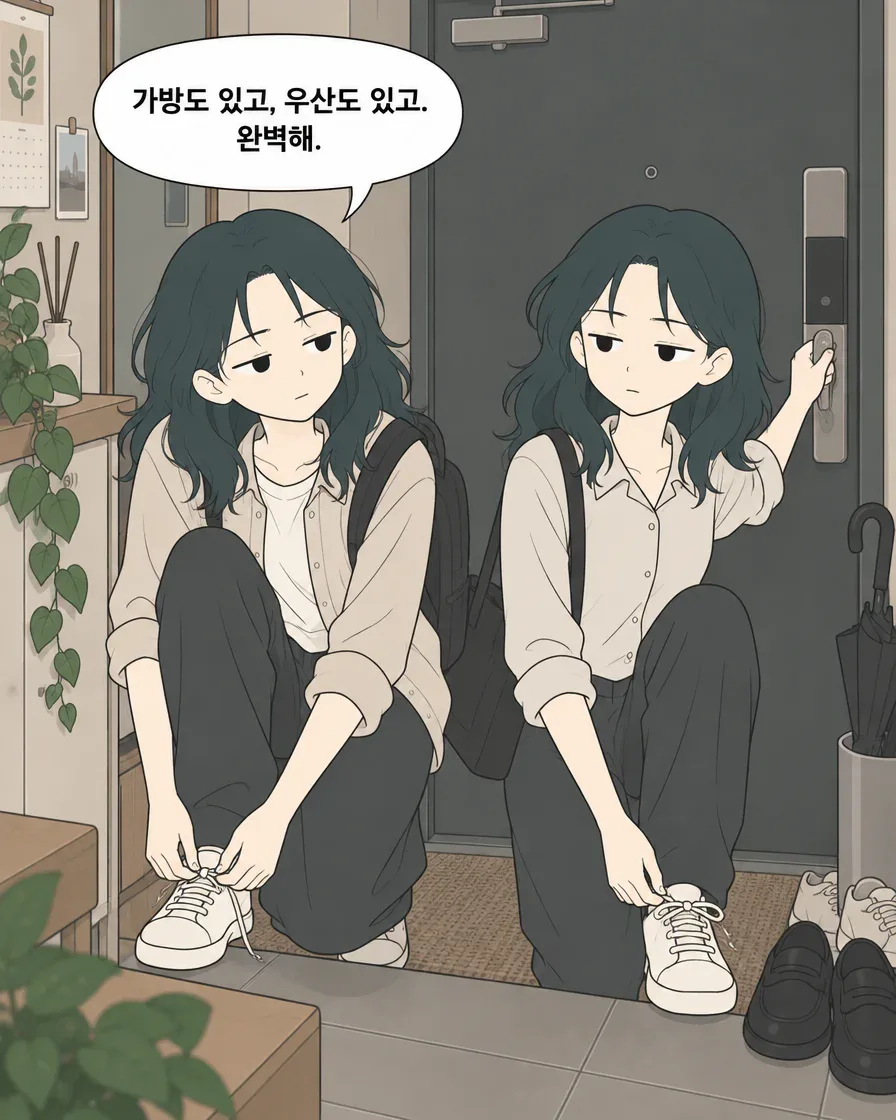
Panel 10 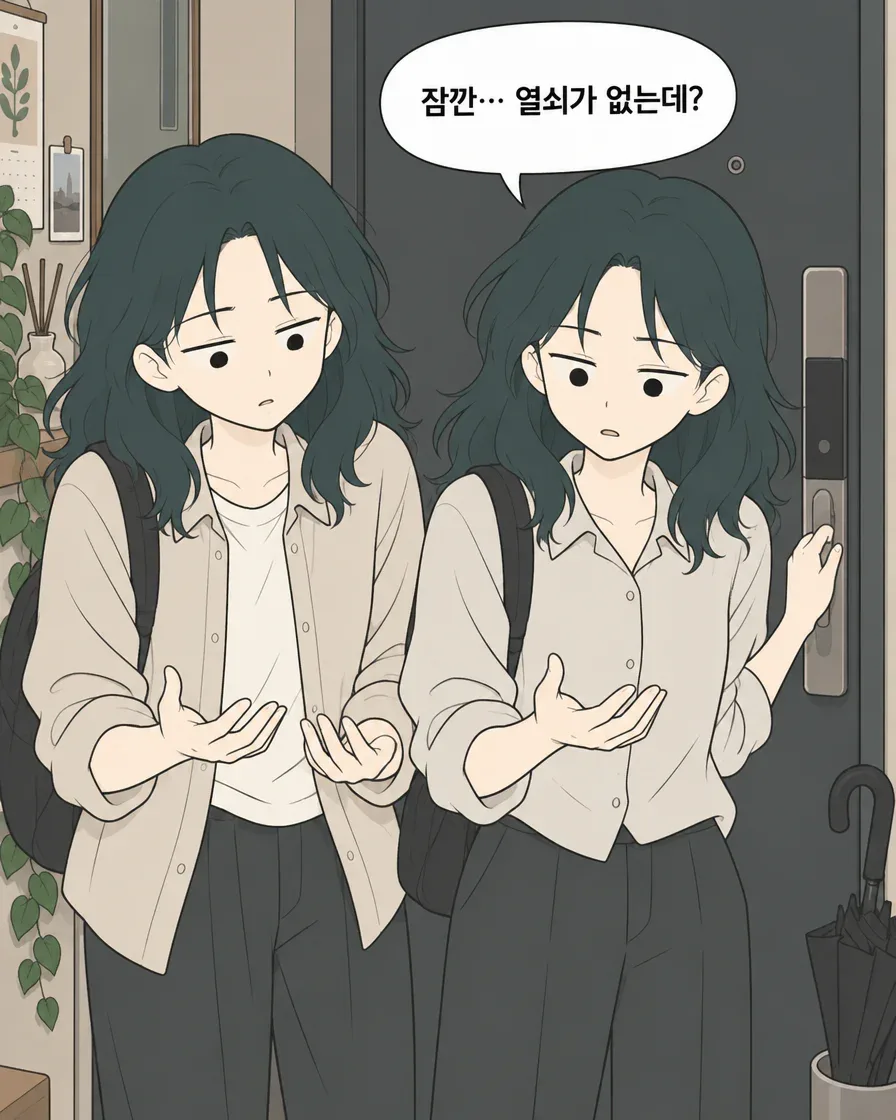
Panel 11 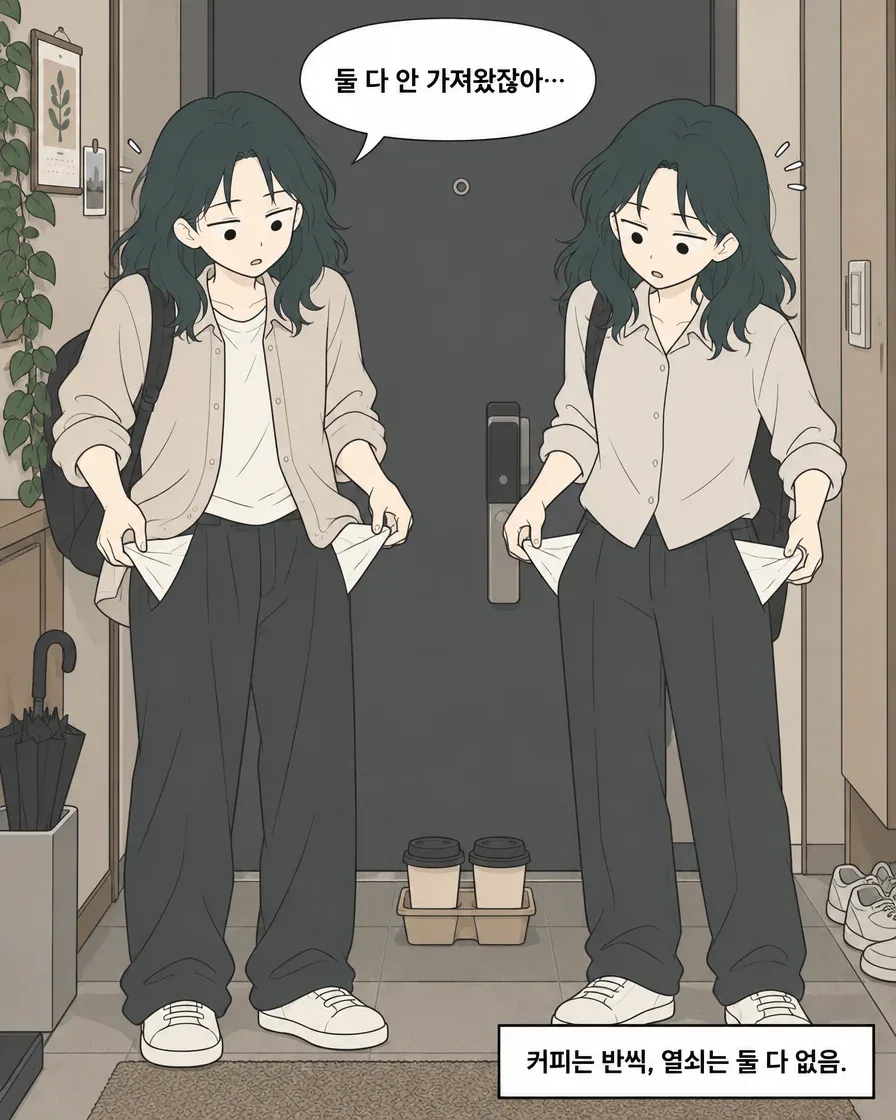
Panel 12
Request for your own version
This example was created from a request in Korean. The request below is translated; it did not generate these images.
Original request used for this example
월요일 아침 어제의 나와 오늘의 나가 커피 한 잔을 두고 싸우다 반씩 나눠 마시고 출근한다. 마지막엔 둘 다 열쇠를 안 가져온 반전. 같은 두 주인공과 선명한 한국어 말풍선의 12컷 일상툰.
Make a 12-panel daily comic: yesterday’s me and today’s me argue over the last coffee, share it, then realize they both forgot the keys. Short English dialogue.
Art style used: Charcoal Slim
How this example was made
- Enter your story
Choose one small frustration from your day and give it a beginning and a twist. Replace the coffee or keys below with details from your own life.
- Review the plan
Read the scenes and dialogue, then check the displayed generation cost. If your first comic starts an automatic countdown, pause it when you want to make changes.
- Read the result
Read the panels at phone size. Check speech bubbles, expressions and who is speaking; list any changes before saving or publishing.
Quick answer
- Choose one moment, give the main character a small goal, then write a setup, a complication, a reaction and an ending.
- Use the storyboard below to plan a four-panel comic before generating any art, and read the result at phone size before sharing.
You leave for groceries with a responsible list. You come home with snacks and no dinner. That is already a story: a plan, a change and a result you recognize. A comic diary gives that small moment somewhere to live.
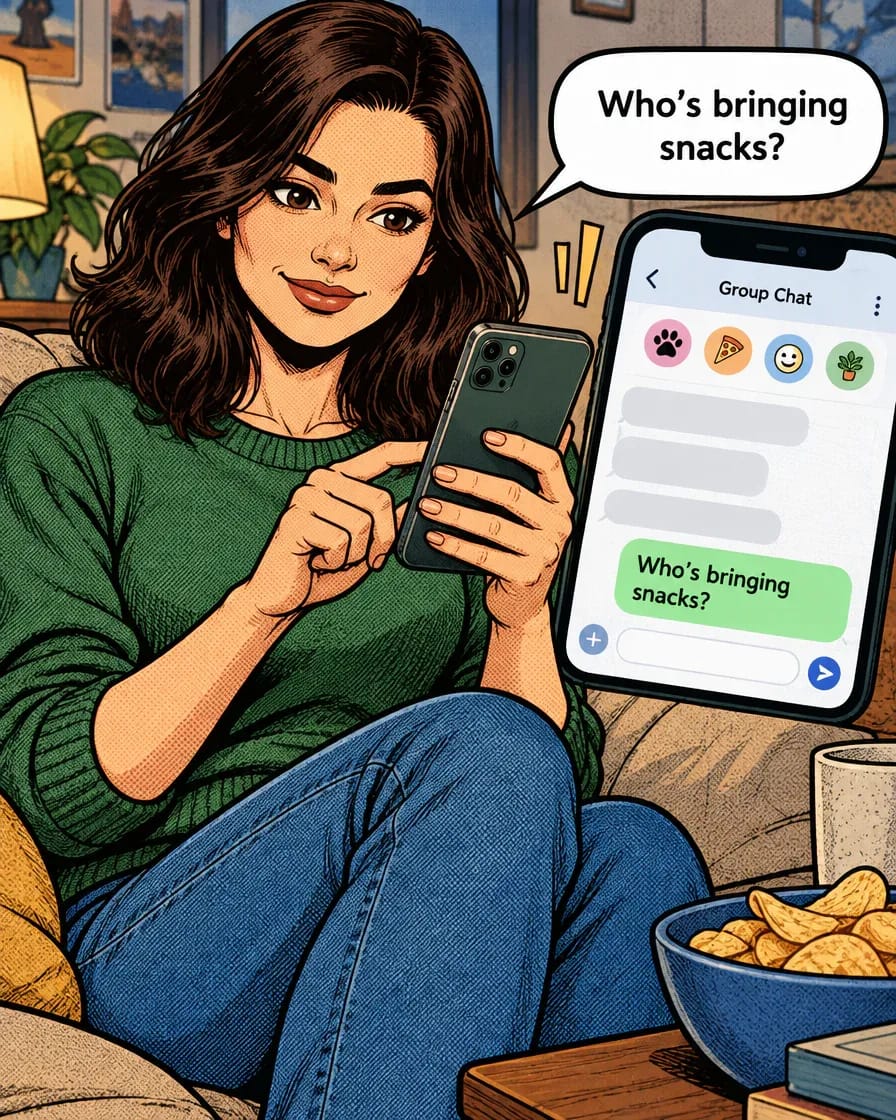
You do not need a dramatic life event or a public audience. Start with something you would tell a friend, keep the people fictional if you prefer, and decide what feeling the last panel should leave. The grocery scene below is an original writing example. The images are labeled existing GenToon comic art, product captures and editorial diagrams; they are not a newly generated version of that script.
This guide uses AI-assisted illustration. You choose the story and review what the tool produces. Generation can get an expression, a prop or a line of text wrong, so leave room to revise.
1. How do you choose one moment from your day?
A day is too much material for one short strip. Choose the moment when an ordinary plan changed: you tried to take a quiet lunch break, the delivery arrived while you were in pajamas, or your carefully packed gym bag contained everything except shoes.
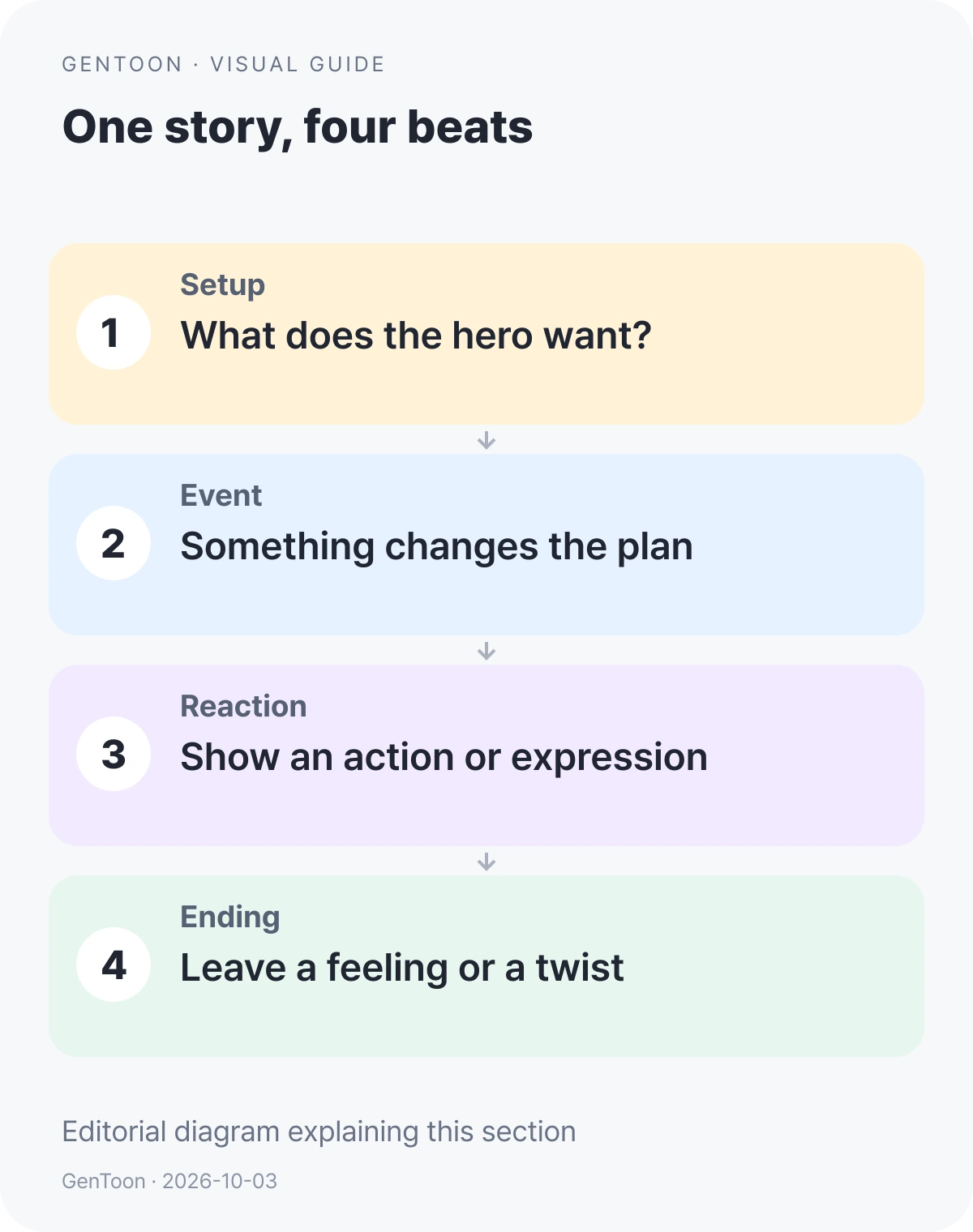
Write two sentences: “I wanted to [goal]. Then [event] happened.” If the second sentence changes nothing, look for a smaller incident with a clear reaction. “I made coffee” is a record. “I reheated my coffee three times and finally drank it cold” gives you a sequence.
For our writing example: Alex wants groceries for a sensible dinner. At home, Alex realizes the bags contain three snacks and none of the ingredients on the list. Keep it affectionate; the point is recognition, not making someone the villain.
2. What goes into a four-panel storyboard?
Give each panel one visible action. A caption can tell us where we are; the picture should show what changes. This is a planning worksheet, not a description of images already generated.
| Panel | What the reader sees | Short line | Purpose |
|---|---|---|---|
| 1 | Alex checks a grocery list outside the store | “Real dinner tonight.” | Show the goal |
| 2 | Alex adds a third snack to the basket | “For the walk home.” | Let the plan slip |
| 3 | At home, Alex empties the bags beside the untouched list | “I forgot every ingredient.” | Make the problem visible |
| 4 | Alex eats crackers beside the list | “Dinner has become a tasting menu.” | End on a gentle joke |
Replace Alex’s situation with your own. A quiet ending also works: someone brings you a sandwich, you laugh at the mistake, or you leave the list by the door for tomorrow. You do not need a punchline if the final image carries the feeling.
When you finish the table, cover the dialogue column and read only the actions. If you cannot follow the change, clarify the scene before asking for art.
3. How do you bring the storyboard into GenToon?
Open GenToon Studio, sign in, and use the story chat in Agent Mode. Describe the main character, the event, the panel count and the ending. Include the words you want in the comic, rather than hoping the tool guesses them.
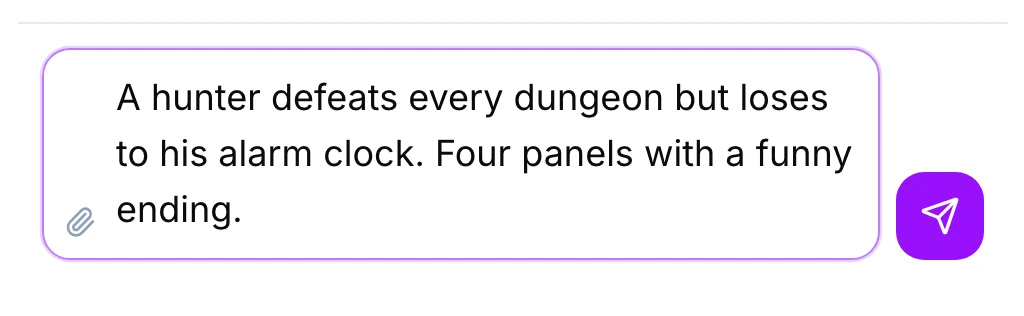
Copy and adapt this example request:
“Create a four-panel comic diary in English about Alex, an adult with short curly brown hair and a green hoodie. Panel 1: Alex checks a grocery list, saying ‘Real dinner tonight.’ Panel 2: Alex adds snacks, saying ‘For the walk home.’ Panel 3: At home, Alex notices the missing ingredients, saying ‘I forgot every ingredient.’ Panel 4: Alex eats crackers, saying ‘Dinner has become a tasting menu.’ Use a warm, simple look, one action per panel and readable short dialogue.”
This request is a suggested starting point. It has not been used to generate the images in this article. Check the plan and the selected generation quality in your own session. The first-comic flow may begin drawing automatically; use the visible pause or change control if you want to revise the plan before drawing. Image generation, new characters and some edits use credits. Read the current cost shown in the product before continuing.
4. How do you keep the character and dialogue clear?
Use a small, stable appearance note: Alex has short curly brown hair and a green hoodie. Keep those features in the story request and use the same saved character when making later episodes. A long list of competing outfit details makes it harder to notice what must stay the same.
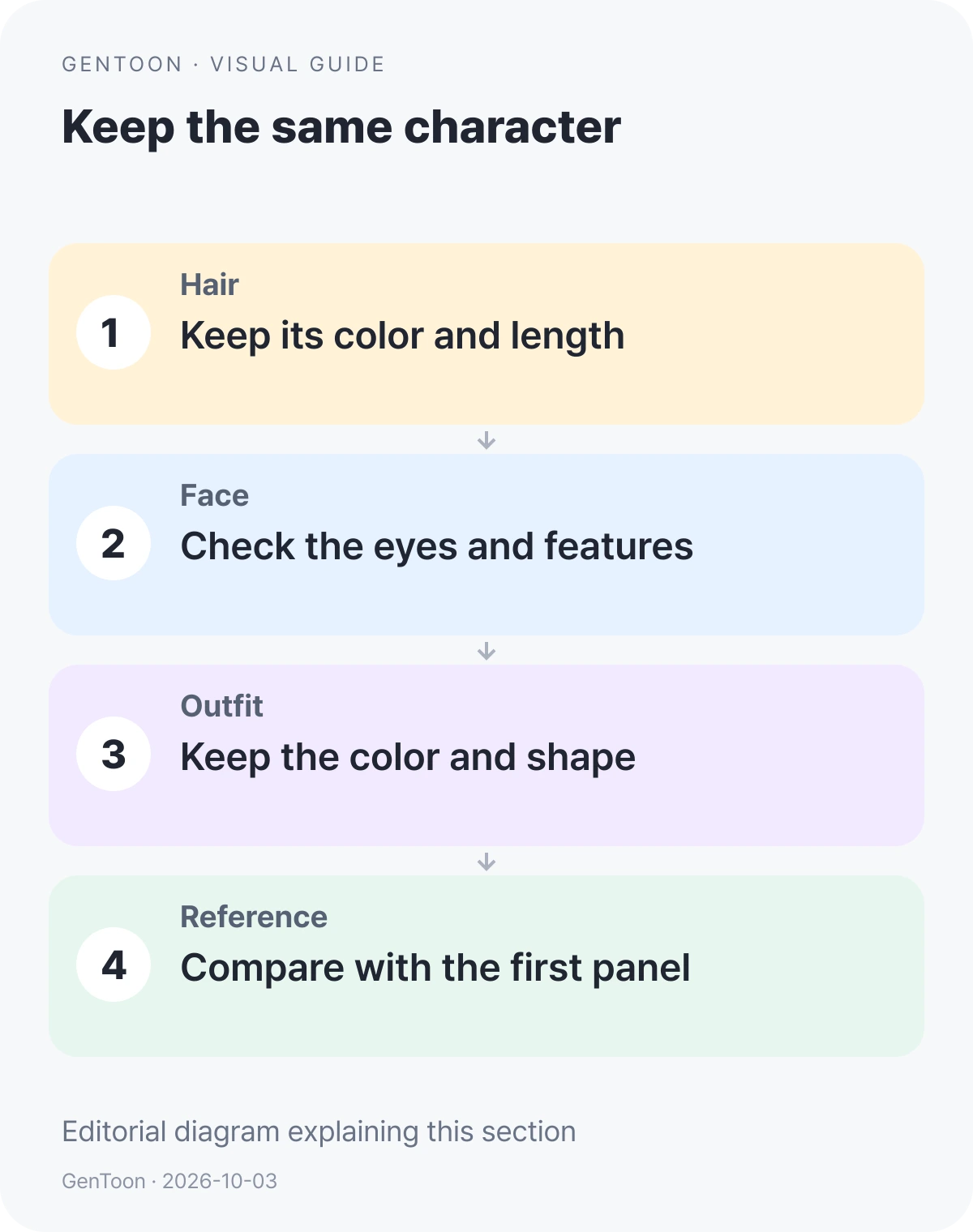
Read every speech bubble aloud. If it feels like an explanation, ask whether the action can carry some of that information. In panel 3, bags full of snacks beside the grocery list explain the mistake; Alex does not also need to describe the whole trip.
Whatever tool you choose, your reader still needs clear order and readable dialogue. In GenToon, compare the generated draft against your table rather than accepting an attractive picture that tells a different story.
5. What can go wrong, and what should you check?
View the finished sequence at the size someone will actually read it. Check the pictures in order, then check the text. A good draft can still have an unreadable bubble, the wrong prop or a character whose expression reverses the intended feeling.
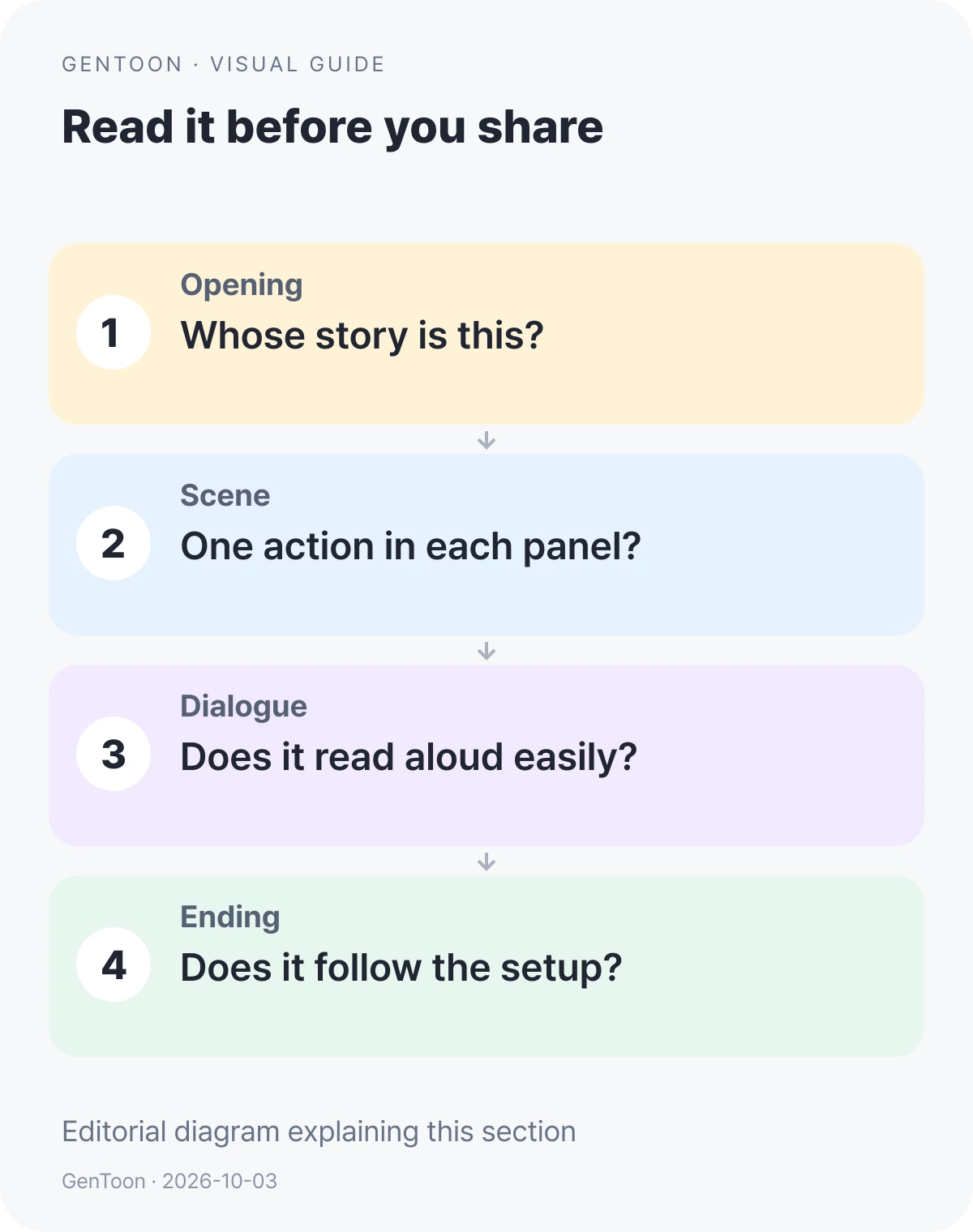
- Can you identify the main character in the first panel?
- Does each panel show the action in your storyboard?
- Is every line correct and readable without zooming?
- Does the last panel follow from the grocery mistake?
- Did a name, address, workplace logo or private detail slip into the art?
If one panel causes the problem, focus the next revision there. Say what is wrong and what should change: “In panel 3, show snacks beside the grocery list; keep Alex’s green hoodie.” Review the next version too. An edit can fix one detail while changing another.
You can save a copy without publishing publicly. If you do share it, ask permission before using someone else’s likeness or private story, and describe the art plainly as AI-generated with GenToon.
6. What makes a useful next entry?
Keep the appearance note and choose another small goal. Alex tries to leave on time, protect a lunch break or finish one load of laundry. The new event should change the story, even when the cast and setting stay familiar.
Save the storyboard alongside the images. Add one note after showing it to a willing reader: the panel they understood first, the line they reread or the detail they missed. Use that observation for your next entry. A confused reader is useful feedback; it is not proof that your whole idea failed.
For a repeatable cast, continue with the character-bible worksheet. To start this entry, open GenToon Studio and replace the grocery scene with a moment you want to remember. Finishing a clear draft is the first goal; audience growth is something to measure after people actually read it.
Frequently asked questions
Can I make a comic diary if I cannot draw?
You can plan a story in words and use GenToon to generate an illustrated draft. You still need to choose the actions, check the text and review the images. AI output may need correction.
Do I have to tell the story exactly as it happened?
You can fictionalize names, settings and small details. Do not present invented events as a factual account about a real person. If the strip is inspired by someone else’s private experience, ask before sharing it.
Is the grocery comic shown as a finished result here?
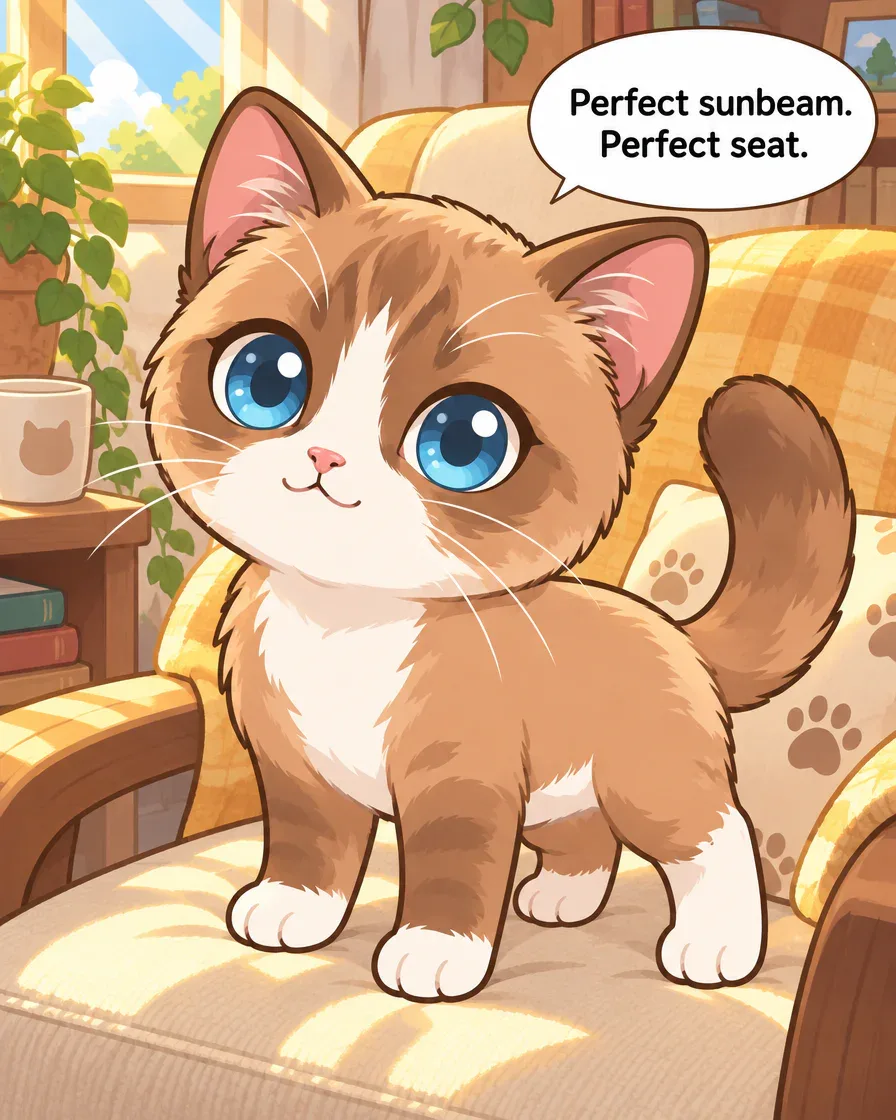
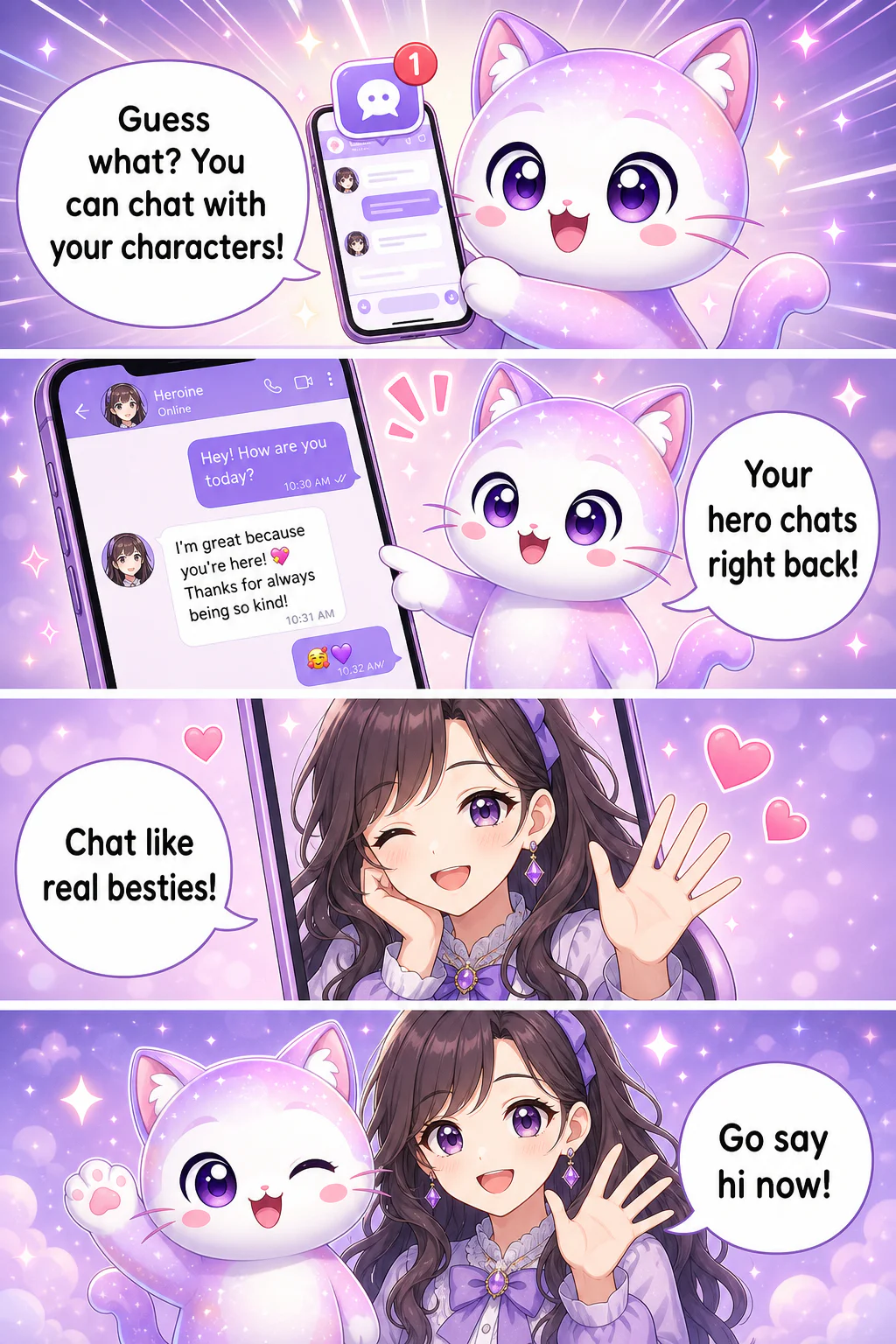
No. The grocery storyboard and request are writing examples. The pictured cat comic is an existing GenToon example, and the other visuals are labeled diagrams or product captures.
How many credits will my comic use?
The amount depends on your generation quality, panel count, new characters and edits. Check the current cost shown in GenToon before drawing; this guide does not promise a fixed price or completion time.